The Price of Privilege: Ayisha Wilkins Reminds Us That Even Famous Fathers Can Leave Ordinary Scars

– 6 min read






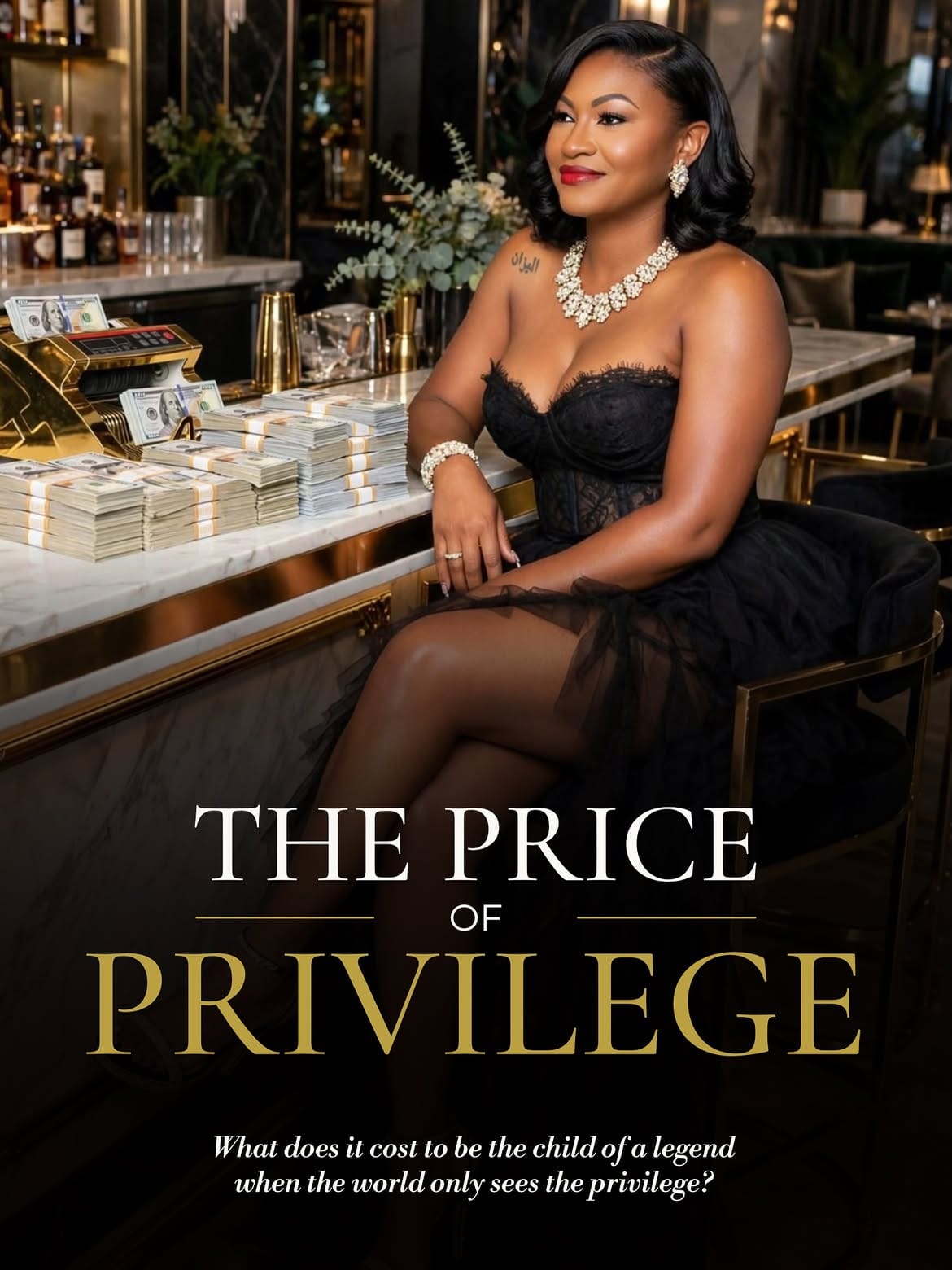
When you first pick up The Price of Privilege and see the beautiful young woman on the cover, then discover that she is the daughter of NBA legend Dominique Wilkins, it’s probably pretty easy to make some assumptions about her life. I don’t think anyone would be wrong for doing so. After all, we’re talking about Dominique Wilkins, one of the most celebrated basketball players in NBA history and certainly one of the most beloved sports figures in Atlanta. This is a man who is so revered in this city that there’s an actual statue of him outside State Farm Arena. His name represents excellence, wealth, celebrity, and the kind of access that most people can only dream about. So naturally, when you hear that his daughter has written a memoir titled The Price of Privilege, you might wonder just how difficult her life could have been.

Well, after reading her book and having the opportunity to interview Ayisha Wilkins for our Chapter & Verse series, I can tell you that her story is probably a lot more familiar than you might expect.
What struck me most about Ayisha’s story is that when you strip away the celebrity, the money, the NBA accolades, and the famous last name, what you’re left with is the story of a little Black girl trying to make sense of her family. And as I read through the pages, I couldn’t help but think about how many little girls, especially those of us who grew up in the South, could tell some version of this very same story.
Parents break up. Feelings get hurt. One parent has more financial power than the other, and sometimes that power becomes another weapon in an already complicated relationship. The parent who is struggling is doing their best to survive, while the child finds herself caught somewhere in the middle, trying to protect one parent while desperately seeking the love, attention, and validation of the other. The only difference is that most of our fathers don’t have statues erected in their honor.
Throughout The Price of Privilege, Ayisha is remarkably candid about the experiences that shaped her childhood and ultimately the woman she would become. She shares her feelings of neglect and disappointment in her relationship with her famous father, the responsibility she felt to defend and advocate for her mother, and the confusion of witnessing her grandmother struggle with mental illness when she was too young to fully understand what was happening. She also reveals the deeply personal trauma of being sexually molested by a family member, an experience that adds another painful layer to an already complicated childhood.
These are not easy stories to tell, particularly when the people involved are still living and the family name carries so much public recognition. But what I appreciated about Ayisha’s approach is that the book doesn’t simply read like a daughter airing out her famous father’s dirty laundry. At least, that wasn’t my takeaway. Instead, it often feels like being invited to accompany someone through the difficult process of examining her own life. It’s almost as though we’re walking through portions of her therapy with her, revisiting the experiences that shaped her understanding of love, family, loyalty, and ultimately herself.
Of course, these are Ayisha’s memories and her perspective, and every family member may have a different account of the same experiences. But the beauty of a memoir is that it gives the author an opportunity to tell her own story, even when that story may be uncomfortable for the people who appear in it.
We are living in a time when family conflict has practically become entertainment. We scroll through social media and watch celebrities argue over child support, custody arrangements, visitation, and who did what to whom. From the highly publicized custody disputes involving Halle Berry and Olivier Martinez to the countless other celebrity parenting disagreements that become headlines, the public often chooses sides as though we’re watching a sporting event. We decide who’s right, who’s wrong, who’s bitter, who’s selfish, and who’s winning. We rarely stop to consider is the child standing in the middle of all that drama.

Somewhere in those arguments is another Ayisha Wilkins, a child who didn’t ask to be born into conflict and doesn’t have the emotional tools to understand why the people who are supposed to love them most can’t seem to get along. That child grows up carrying feelings that don’t simply disappear because the adults have moved on, remarried, or started new families. Sometimes those feelings follow them into adulthood, into their own relationships, and eventually into the way they parent their own children. This is what makes The Price of Privilege more than just another celebrity memoir.
Ayisha allows us to grow with her. We meet the little girl who is struggling to understand her circumstances, the teenager navigating the emotional consequences of those experiences, and the young woman trying to establish her own identity. Eventually, we meet the wife and mother who must decide what parts of her upbringing she will carry forward and what patterns she wants to leave behind.
One of the things I’ve come to understand as I’ve gotten older is that very few people are entirely good or entirely bad. Most of us are a combination of what we’ve experienced, what we’ve been taught, what we’ve survived, and what the people responsible for raising us were dealing with while they were trying to raise us. Sometimes our parents give us their very best, and sometimes their very best is still not enough to protect us from being hurt. We can acknowledge the sacrifices they made while also acknowledging the damage that may have occurred along the way.
Those two truths can exist in the same family.
I think that’s part of what Ayisha is trying to work through in this memoir. She’s examining not just what happened to her, but how those experiences shaped her understanding of herself and the world around her. And while readers may have different opinions about the people in her story, I hope they don’t overlook the courage it takes to examine your family honestly, especially when doing so means confronting some things you’ve spent years trying to understand.
We’ve all heard the saying that all that glitters is not gold, but The Price of Privilege gives that familiar expression a very human face. Having access to wealth doesn’t guarantee emotional security. A famous last name doesn’t protect a child from loneliness. And having a father whom the entire world admires doesn’t necessarily mean that a daughter always feels seen, heard, or valued in the ways she needs.
There is something particularly heartbreaking about the idea that millions of people can celebrate a man for everything he has accomplished while his child is still trying to reconcile her own experiences with him. The public sees the highlights, the championships, the standing ovations, and the statue. A child sees something entirely different. Neither perspective automatically erases the other, but it’s a reminder that public success and private relationships are not always measured by the same standards.
What I appreciate most is that Ayisha doesn’t present herself as someone who has figured everything out. Her journey is ongoing, and I think that honesty makes the book more relatable. Healing isn’t always some beautiful moment when everybody apologizes, hugs, and agrees to start over. Sometimes it’s recognizing the things that hurt you, learning why they continue to affect you, and making the decision that your children deserve a different experience.
My hope is that sharing her story ultimately opens the door for understanding and healing within her own family. I don’t believe every family disagreement needs a villain, and I certainly don’t believe that being a great athlete or an admired public figure makes someone incapable of making mistakes as a parent. We’re all human, and sometimes the very people who have accomplished extraordinary things in their professional lives still struggle with the ordinary responsibilities of loving the people closest to them.
The Price of Privilege is a reminder that the real measure of a family’s wealth has very little to do with what’s in the bank. It’s about the love, security, support, and emotional foundation we’re able to provide for the generations coming behind us.
I applaud Ayisha Wilkins for having the courage to share her story, especially the parts that I’m sure would have been easier to keep private. I also applaud her willingness to look beyond what happened to her and consider what she can do differently for her own family.
Because ultimately, the most valuable thing Ayisha may have inherited from her famous father isn’t his name, his connections, or even access to a world most people only dream about. It may be the understanding that having everything the world considers valuable still doesn’t mean you have everything you need.
And perhaps the greatest privilege she can give her own children is the freedom to grow up without having to heal from the same wounds she did.