Black Rom-Coms Return to Theatrical Magic With You, Me & Tuscany

– 6 min read


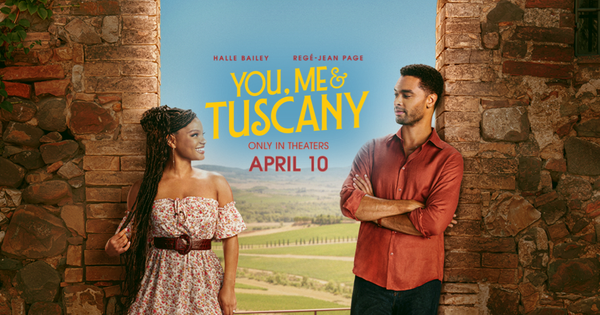
Will Packer has proven himself to be a cultural architect who understands how his stories must be introduced to the communities that have long carried them in their hearts. That truth was felt the moment he addressed the Atlanta audience and shared a statistic that stopped the room cold: there has not been a Black romantic comedy released in mainstream theaters in more than ten years, not since Think Like a Man Too, a milestone made even more striking because it was his own production. Hearing him say it aloud was genuinely shocking for many of us in attendance, because when you are constantly consuming strong Black storytelling across streaming platforms and television, it is easy to lose sight of the unique significance of a Black rom-com commanding theatrical space. Packer’s genius is that he does not simply remind audiences of what has been missing, he reminds us why it mattered in the first place, inviting Black viewers into the process of restoring that tradition and making us feel like active participants in ensuring these stories are once again prioritized and valued.
For many of us, that realization immediately awakened nostalgia. I grew up in the era when Black rom-coms were events, the kind of cultural moments that automatically made their way onto our calendars. I remember going to the theater to see Coming to America. I remember going to see Boomerang. I remember the collective excitement around Love Jones, the kind of film that instantly became part of the conversation the next day, whether that was at school, at work, over brunch, or now in the group chat. There has always been something deeply communal about the way Black audiences show up for romance on the big screen. We plan girls’ nights around it. We turn it into date night. We debate the scenes, quote the lines, and revisit the characters as if they are people we know personally. Films like Love Jones, Boomerang, and Coming to America no longer feel like simple movies, they belong to our culture, part of the emotional archive of Black joy, flirtation, humor, and aspiration. That is the nostalgia Will Packer understands better than most, and it is exactly the cultural memory he taps into with You, Me & Tuscany.

That deeper context made the viewing experience feel richer before the first scene even began, because the film arrives carrying not only its own love story, but the weight of a genre Black audiences have quietly missed in theaters. While streaming has given us no shortage of worthy Black projects, there is still something irreplaceable about the communal energy of watching romance unfold in a darkened theater, hearing laughter ripple across the room, feeling the audience collectively lean toward the inevitable kiss, and leaving the cinema already knowing tomorrow’s conversations will be about favorite scenes, favorite lines, and whether the heroine chose the right man.
With that emotional groundwork in place, You, Me & Tuscany opens as the kind of cinematic escape audiences have been craving. If I am being completely honest, the first great romance in the film is the setting itself. Tuscany is photographed so gorgeously that the landscape becomes its own leading character, with sun-drenched vineyards, warm stone villas, winding roads, and golden light that softens every frame into something lush and transportive. The cinematography is indulgent in the best way, making the audience feel as though we too have been invited into this world of elevated beauty, where life moves slower, meals last longer, and love feels inevitable.
That visual seduction is deepened by the film’s celebration of food, which is captured with as much romance as the central couple. Every table is alive with color, from bright vegetables to rich pastas and textured breads, all of it filmed with such sensuality that by the end of the movie, Italy itself feels like a love language. There is joy in the abundance, in the way the meals feel communal and intimate at once, and it adds another layer of aspiration to the film. This is the kind of story that makes you want to book the trip, taste the wine, and surrender to the possibility that romance might still be waiting in a place far removed from routine.
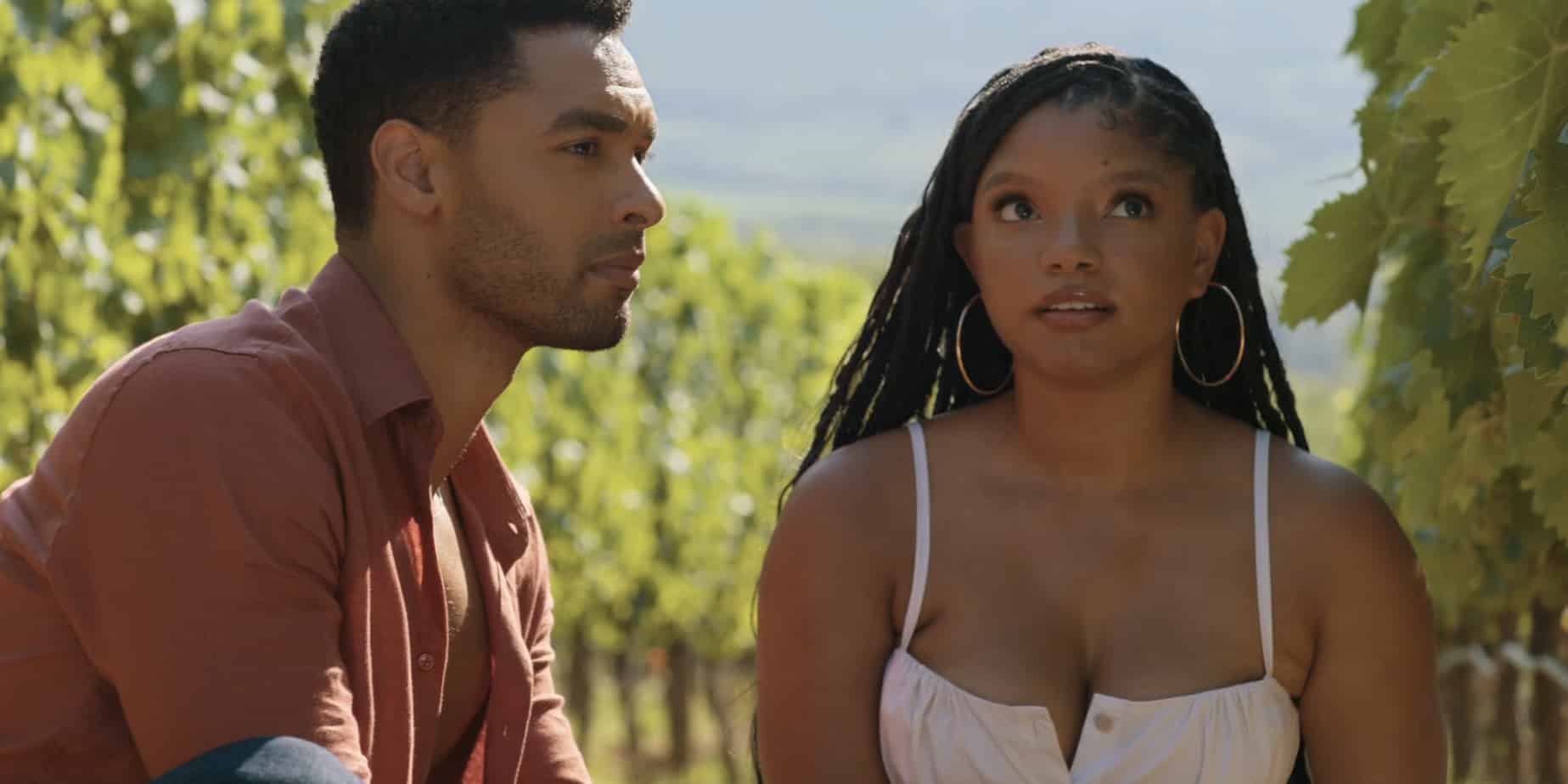
Of course, it helps tremendously that the cast is stunning. Halle Bailey is beautifully cast as Anna, bringing the exact sweetness and emotional openness the role requires, while Regé-Jean Page brings the polished ease and devastating good looks that great romantic comedies demand from their leading men as Michael. Then there is Lorenzo de Moor as Mattteo, the impossibly handsome Italian presence whose energy gives the film another layer of fantasy and temptation, the kind of beautiful antagonist-adjacent complication that only deepens the escapist pleasure of the story.
The beauty of Halle’s performance is that she never lets Anna’s softness read as fragility. Instead, Anna feels like a woman who has known disappointment and still refuses to let it harden the part of herself that remains hopeful. That quality is deeply relatable, because no matter our age, there is always a younger, freer version of ourselves that resurfaces when love appears, the version that still wants to leap, trust, and believe in the possibility of surprise. Opposite her, Page’s chemistry with Bailey works because it never strains. It rests comfortably in the fantasy of what romance should feel like, effortless, magnetic, and emotionally clarifying, while Matteo’s presence sharpens the emotional stakes with just enough intrigue.
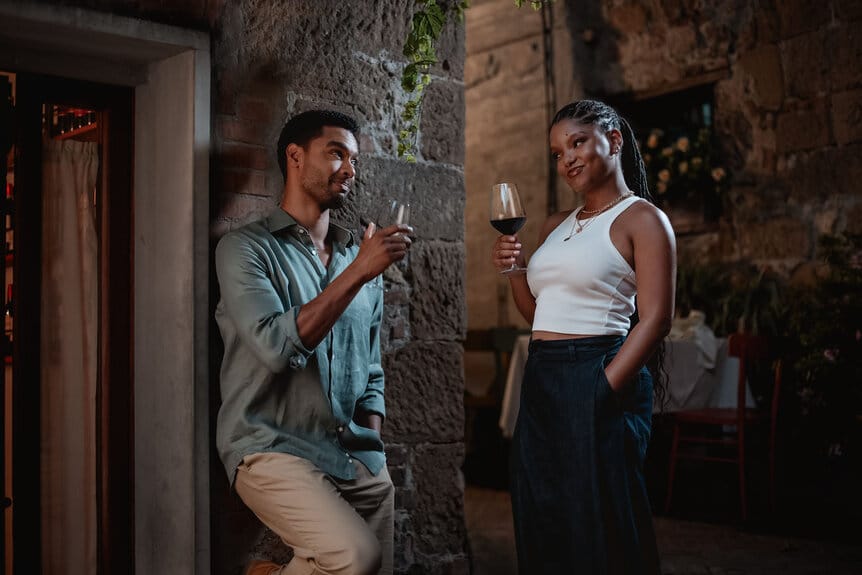
What I appreciated most, however, is the film’s refusal to burden its romance with unnecessary complication. There is something refreshing about a writer who is unafraid to write simply about love. In a storytelling era where so much is asked to carry political, social, or cultural messaging, You, Me & Tuscany is content to celebrate the timeless pleasure of connection. It is about the kind of love that makes you feel younger, more alive, and more open to risk. That simplicity is not a weakness, it is the film’s greatest strength, because romance works best when it gives audiences permission to believe in vulnerability without irony.
The structure of the story embraces the familiar rhythms that make rom-coms so beloved. The wrong relationship provides the emotional setup, the unexpected man becomes the true mirror, and the heroine’s journey is less about choosing between men than it is about choosing the fullest version of herself. There is something almost fairy-tale in the way the story unfolds, and rather than resisting that familiarity, the film leans into it. That is exactly what makes it satisfying.
Romantic comedies are not always meant to reinvent narrative. Sometimes their purpose is to remind us why we fell in love with the genre in the first place. They allow us to aspire, to soften, and to imagine that life can still surprise us with beauty in unexpected places. You, Me & Tuscany understands that assignment completely, and in doing so, it offers something that feels larger than a simple love story.
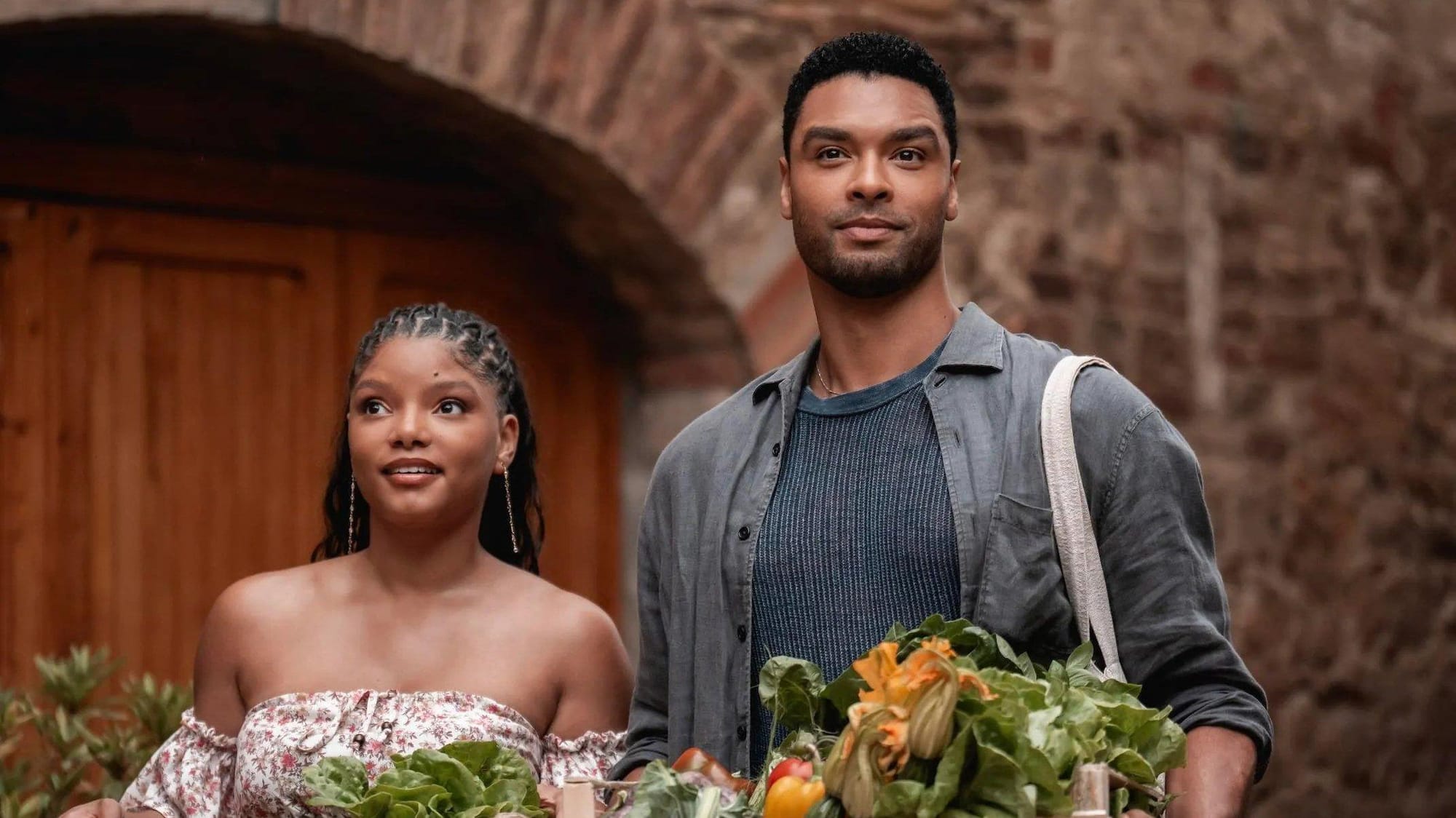
In many ways, this film restores the kind of cinematic optimism Black audiences have long associated with the theatrical rom-com experience. It reminds us that love is universal, but it also reminds us that the Black community has always had a unique relationship with seeing romance reflected on the big screen. These stories become part of our collective memory. They become shorthand in our conversations. They become date-night references, girls’ night nostalgia, and cultural touchstones we carry for years.
That is why the film matters beyond its beautiful setting, gorgeous cast, and satisfying romance. It reminds us that cinema still has the power to bring us back to the best parts of ourselves, our softness, our longing, our hope, and our willingness to believe in joy.
And when Black romance returns to theaters, it never feels like just another release; it feels like coming home.
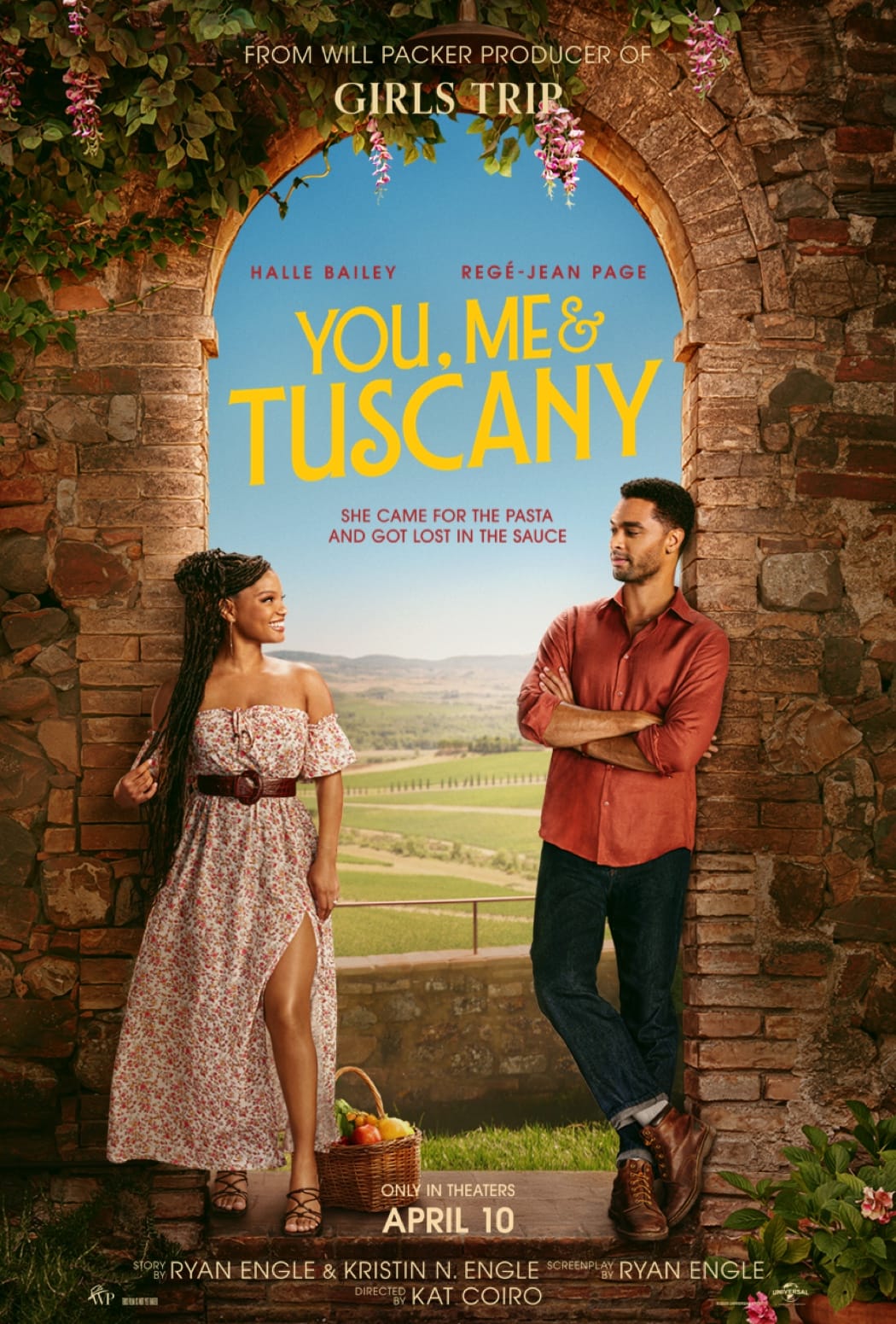
You, Me & Tuscany is scheduled for release in theaters everywhere April 10th.