A Soft Life Requires Soft Skills

– 6 min read






Everybody seems to want the soft life these days. Social media is filled with conversations about femininity, luxury, marriage, homemaking, emotional peace, and living well. Young women are studying the aesthetics of grace while young men are embracing conversations about leadership, legacy, and becoming providers. Everywhere you look, influencers are offering advice on how to attract better relationships, create beautiful homes, move through life with ease, and embody confidence. Yet somewhere between the hashtags and highlight reels, an important truth has been overlooked. A soft life is not built on appearances alone. It is sustained by communication, emotional intelligence, self-awareness, confidence, and the ability to build meaningful relationships. In other words, a soft life requires soft skills.
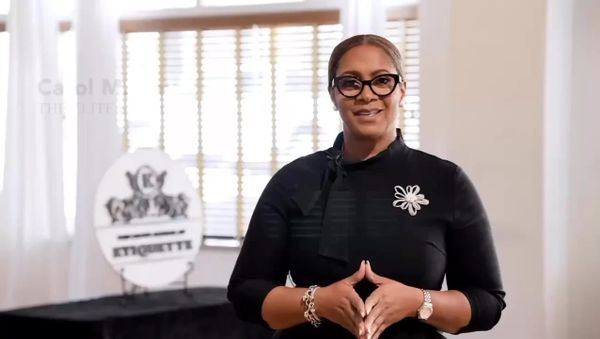
That is why my recent conversation with Carol Rey felt especially timely. As founder of the Elite School of Etiquette and the Elite Social Foundation, Rey has spent years teaching the very skills many families once passed down naturally. Long before social media influencers were discussing elegance and femininity, parents, grandparents, churches, and communities were teaching young people how to introduce themselves, carry conversations, host guests, resolve conflicts, show respect, and move confidently through the world. Rey believes those lessons are not relics of the past. In fact, she believes they may be more important than ever.
As we celebrate Juneteenth, conversations about education, economic empowerment, and community advancement rightfully take center stage. We talk about entrepreneurship, homeownership, financial literacy, and leadership. Those conversations are essential. However, there is another form of preparation that deserves equal attention. It is the intentional teaching of confidence, civility, grace, self-respect, and social awareness. These are the qualities that help people not only gain access to opportunities but thrive once those opportunities arrive. They are also qualities that have long been a part of our cultural heritage, even if history has not always given us credit for them.
One of the most refreshing aspects of speaking with Rey was her willingness to challenge the assumption that etiquette and refinement are concepts borrowed from European culture. She points to African civilizations and the Moors as examples of societies known for their scholarship, advancement, hospitality, and social structure. According to Rey, Black people have always possessed traditions rooted in dignity, decorum, and respect. The problem is not that those traditions never existed. The problem is that many of us were never taught to recognize them as part of our own history.
That perspective is especially important because there remains a persistent misconception within some corners of our community that speaking properly, practicing good manners, understanding social etiquette, or conducting oneself professionally somehow amounts to “acting white.” It is a phrase many of us have heard growing up, and one that has unfortunately discouraged some young people from embracing skills that could benefit them personally and professionally. Rey believes much of that perception stems from representation. For generations, the faces associated with etiquette schools, finishing programs, and social training were predominantly white. The books, television programs, and public experts reflected that reality, causing many people to mistakenly associate etiquette itself with race rather than recognizing it as a life skill.
The irony is that many Black families have always practiced etiquette without calling it that. We learned to say “please” and “thank you.” We were taught to greet adults when entering a room. We knew better than to interrupt conversations or disrespect our elders. Hospitality was expected. Kindness was encouraged. Respect was non-negotiable. These lessons were not about assimilation. They were about character. They were passed down through generations because they strengthened families, communities, and relationships.
As Rey points out, one of the challenges today is that many of the environments where those lessons were traditionally reinforced have changed dramatically. Families are busier than ever. Dinner tables that once served as classrooms for conversation and social development have become less common. Young people spend more time interacting through screens than they do face-to-face. While technology has created incredible opportunities, it has also reduced many opportunities for practicing the interpersonal skills that help people build trust, navigate conflict, and establish meaningful connections. Social awareness, communication, and confidence are not skills that develop automatically. Like any other skill, they require intentional teaching and consistent practice.
What makes Carol Rey’s work so valuable is that she does not present etiquette as a collection of outdated rules designed to make people conform. She teaches it as a practical toolkit for success. Her students learn how to introduce themselves confidently, maintain eye contact, communicate effectively, navigate interviews, dress appropriately for different occasions, and present themselves in ways that reflect their best qualities. They learn how to enter unfamiliar spaces without intimidation and how to engage others with confidence and authenticity. Most importantly, they learn that professionalism and individuality can coexist.
One of the philosophies that runs throughout Rey’s work is the belief that students should never sacrifice their authentic selves. She regularly reminds them that there is a difference between changing who you are and learning how to present who you are effectively. Confidence does not require imitation. Professionalism does not require abandoning culture. Etiquette is not about becoming someone else. It is about learning how to navigate different environments while remaining rooted in your own identity.
That lesson feels particularly relevant in today’s social media culture. One of the most fascinating trends of recent years has been the resurgence of femininity content, soft life culture, and the romanticizing of Southern elegance. Influencers regularly discuss grace, luxury, marriage, homemaking, femininity, and traditional values. Reality television personalities often present carefully curated images of Southern charm and sophistication. There is nothing inherently wrong with that. In fact, many people are understandably drawn to the stability, confidence, and intentionality these lifestyles appear to represent. The challenge is that many people are pursuing the image without understanding the skills that support it.
Looking polished is not the same as being polished. A designer wardrobe cannot teach emotional intelligence. A luxury handbag cannot teach hospitality. A beautiful home cannot teach conflict resolution. A carefully curated social media presence cannot teach communication skills, self-awareness, or how to make others feel valued in your presence. Many young women aspire to embody the grace of a Southern belle, while many young men aspire to project the confidence of a Southern gentleman. Yet very few have received the type of instruction that previous generations often learned from parents, grandparents, mentors, and community leaders.
That is where Carol Rey’s work becomes especially powerful. While social media teaches people how to look the part, she teaches them how to become the part. Her programs focus on the qualities that matter long after the photos have been posted and the trends have changed. She teaches students how to communicate thoughtfully, engage respectfully, listen actively, and move through the world with confidence and grace. Those skills never go out of style because they are rooted in human connection rather than appearance.
The conversation becomes even more important when we begin discussing relationships and family life. One of the things we rarely acknowledge is how little preparation many young people receive before entering serious relationships, marriage, or parenthood. We spend years teaching academics. We encourage career development. We emphasize financial literacy and professional advancement. Yet we often neglect the interpersonal skills required to sustain healthy relationships and thriving households.
Young women should learn these lessons long before they begin preparing for marriage. Young men should learn them long before they begin leading families of their own. Future parents should understand the importance of communication, hospitality, emotional intelligence, and respect before they are responsible for passing those values to the next generation. The strongest relationships are often built by people who developed these skills before they ever fell in love. These are not simply social skills. They are relationship skills, leadership skills, family-building skills, and community-building skills. They shape how people interact with the world and ultimately determine the type of environments they create for the people they love.
Throughout our conversation, Rey consistently returned to a principle that sounds simple but carries tremendous weight. Etiquette, she says, is fundamentally about consideration for others. It is about being kind, thoughtful, and respectful. It is about understanding that our actions affect the people around us and choosing to conduct ourselves in ways that reflect both self-respect and respect for others. In a culture that often rewards attention-seeking behavior and instant gratification, that message feels increasingly valuable.
Over the years, Rey has watched countless students transform before her eyes. She has seen young people arrive believing etiquette classes were unnecessary only to discover how useful those lessons became in interviews, networking opportunities, leadership positions, and social environments. She recalls students who initially resisted the training but later returned to share stories about opportunities they secured because they felt more prepared and confident. Those moments reinforce something Rey has always believed: confidence is often the result of preparation.
As we celebrate Juneteenth and reflect on what it means to prepare future generations for success, perhaps it is time to expand the conversation. Freedom created opportunity, but opportunity still requires preparation. We teach our children how to earn degrees, build businesses, and pursue careers. We should be just as intentional about teaching them how to communicate, lead, build healthy relationships, host a welcoming home, and carry themselves with confidence and grace. Those are not outdated skills. They are life skills.
The future will continue to be shaped by technology, artificial intelligence, and rapid change. Yet there are qualities that no machine will ever replicate: presence, discernment, empathy, respect, emotional intelligence, character, and genuine human connection. Those are the qualities Carol Rey is helping cultivate every day through her work.
If the goal is truly to create a softer, more fulfilling life, Carol Rey offers a reminder that feels both timeless and urgently relevant. Before we pursue the soft life, we must first develop the soft skills necessary to sustain it.
“Technology cannot replace presence, discernment, respect, emotional intelligence, and character. Etiquette, charm, and civility are becoming premium skills.” — Carol Rey