Truth Hurts Isn’t Pandering to Women and That May Be Exactly Why They Keep Listening
– 9 min read





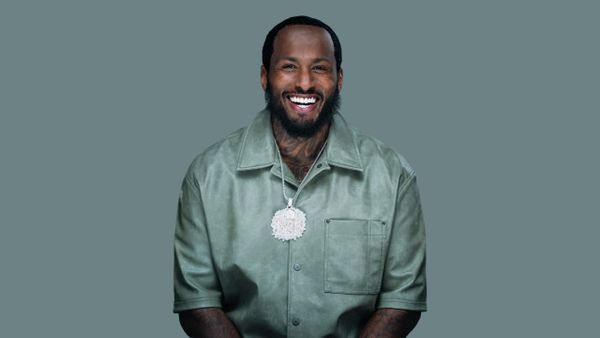
The Philly relationship personality has built an audience by saying the things people do not always want to hear, admitting his own flaws and refusing to pretend social media created the war between Black men and women.
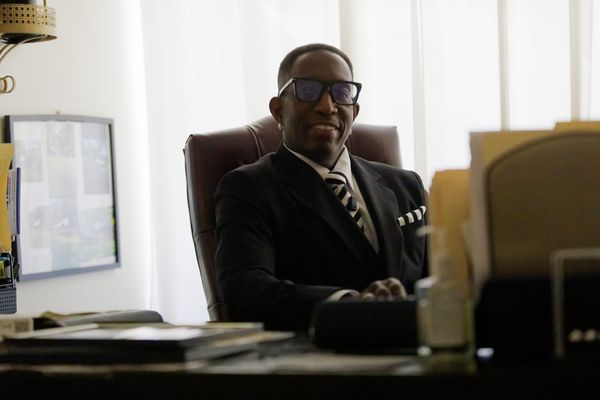
Truth Hurts is not particularly interested in making women feel good. That becomes clear pretty quickly when you listen to him talk, and strangely enough, it may be one of the reasons so many women are listening. In a social media landscape crowded with male relationship personalities who have figured out exactly what their female audiences want to hear, Truth Hurts seems almost committed to doing the opposite. He is blunt, occasionally abrasive, undeniably cocky and very comfortable with himself. He is also surprisingly self-aware about all of it. When he joined me and my co-host Scorpio Moe for a conversation on Dating Diaries, what I expected to be an entertaining discussion about relationships became something much more interesting: a conversation about influence, accountability, attraction, marriage and whether social media really has as much power over Black love as we have decided to give it.
Maybe the name should have warned me. Truth Hurts has built his platform around saying what he believes whether the person on the other side of the screen appreciates hearing it or not. There is no polished relationship-guru presentation and very little effort to position himself as the enlightened man coming to save women from themselves. His story does not begin with a psychology degree, a coaching certification or some carefully crafted desire to become an internet thought leader. He came from the streets of Philadelphia and describes himself as someone who always had a hustler’s mentality. He knew he had opinions, and he certainly knew he had something to say, but becoming a social media personality was not necessarily the master plan. Then he posted his thoughts about a subject one day, the post went viral, and the hustler in him immediately recognized an opportunity.
If people wanted to hear him talk and other people were building businesses by talking online, he figured there was no reason he couldn’t do the same. That part of his story actually explains a lot about the man you see today because Truth Hurts approaches social media much more like a businessman than someone simply enjoying internet popularity. He understands that attention is valuable, but he also understands that attention and revenue are two very different things. His years as a personal trainer had already taught him that lesson. Women could be attracted to the trainer, flirt with the trainer and enjoy looking at the trainer, but at some point somebody still had to pay for the training. Social media, he realized, wasn’t all that different.
And yes, women are attracted to him. Very attracted to him. Pretending otherwise would make this article considerably less interesting, especially because Truth Hurts certainly isn’t pretending otherwise. When I asked how he navigates having a platform where so many of his followers are women who openly find him attractive, he didn’t reach for the obligatory humility that usually accompanies that question. Instead, he smiled and answered exactly the way you’d expect someone named Truth Hurts to answer. “They’re going to call me arrogant for saying this, but I don’t care. I’ve been visually advantaged my whole life.” It’s a line that could easily come across as pure ego, but the confidence wasn’t performative. It was matter-of-fact.
His point wasn’t that social media suddenly made him attractive. It was that female attention wasn’t a new experience simply because he had accumulated followers. Before relationship coaching, before viral videos and before social media ever became a business, he had already learned how to navigate women who found him attractive. His years as a personal trainer only reinforced that lesson. Then he said something that completely shifted the conversation. If you’ve ever watched his videos, you’ve probably noticed he isn’t obsessing over perfect lighting or flattering camera angles. That’s intentional.
“I don’t want them to get caught up in how the messenger looks,” he explained. “I want them to hear the message.” For someone who openly admits he’s been “visually advantaged,” it was an unexpectedly disciplined answer. He’s aware his appearance opens the door, but he’s determined not to let it become the product. He also rejected the idea that his appeal is based solely on looks. “I think more women kind of fall for the aura,” he said. “It’s confidence. It’s unwavering belief in myself. And I think that’s attractive in itself.” Whether readers agree with him or not, that unwavering confidence has become one of the defining characteristics of his brand.
That confidence also explains why he refuses to pander to the women who make up such a large percentage of his audience. “I’m not here to people please you,” he said. He knows some women tune in because they find him attractive. He also knows many of those same women don’t appreciate being challenged by someone they’d rather flirt with than argue with. Laughing, he joked that when women don’t like what he says they’ll call him everything except wrong. But underneath the humor was a philosophy that separates him from so many personalities occupying the relationship space. He’s far more interested in being respected than adored. Ironically, that’s probably what makes him even more attractive to the audience that discovered him in the first place.
I watched some of his livestreams after our interview because I wanted to see whether that philosophy existed beyond our conversation, and it did. He consistently redirected women with deeper questions toward booking time with him rather than allowing the comment section to become an endless free counseling session or flirtation circle. His business remains visible even when his personality is the attraction. There is something almost fascinating about watching a man understand that women may be attracted to him without behaving as though their attraction entitles them to access. He doesn’t seem embarrassed by the fact that some women are there because they like looking at him, nor does he appear confused enough to mistake every admirer for a customer. He learned that distinction long before social media.
That led us into the larger question I have been thinking about lately: Is social media destroying Black love? Spend enough time online and you could certainly believe it is. Black men and Black women routinely occupy opposite corners of the internet throwing accusations at each other about dating, marriage, money, submission, masculinity, femininity, single motherhood, body counts, cheating and seemingly everything else two human beings could possibly disagree about. Algorithms reward conflict, so the loudest and ugliest versions of those conversations often travel the farthest. After scrolling through enough of it, you could easily conclude that Black men and women no longer like each other very much.
His argument is that social media may amplify people’s opinions, but it doesn’t necessarily create them. He grew up before social media became the cultural force it is today, so he doesn’t see the internet as the authority younger people sometimes allow it to become. More importantly, he believes people who are easily influenced were probably always going to be influenced by somebody. Take away Instagram, TikTok, YouTube and Facebook and the same person might simply take bad advice from a bitter girlfriend, an unhappy coworker, somebody at the barbershop, a family member with a disastrous relationship history or whoever happens to have their ear at the moment. Social media didn’t invent impressionable people. It just gave considerably more people an opportunity to influence them.
His point stayed with me because perhaps we have given social media too much credit for destroying something it may simply be exposing. Black men and women were arguing about relationships long before anybody could turn the disagreement into a livestream. Women had these conversations in beauty salons, living rooms and girls’ trips. Men had them in barbershops, locker rooms and wherever men felt comfortable enough to tell each other the truth. Social media took conversations that were once private, put a ring light in front of them and invited millions of strangers to comment. The conversation isn’t necessarily new. The audience is.
Truth Hurts believes much of the hostility we see online ends the minute people put their phones down. The woman typing that all men are useless may still want a husband. The man declaring that modern women are impossible may still be texting a woman he hopes will become his girlfriend. People perform certainty online that their actual lives frequently contradict. That doesn’t mean the constant negativity is harmless, particularly for younger people whose understanding of relationships is being developed alongside algorithms designed to reward outrage. But his larger point deserves consideration: if a sixty-second video from a stranger can completely change how you view an entire gender, the stranger may not be the biggest problem.
Marriage makes his position even more interesting because Truth Hurts is no longer discussing relationships strictly from the outside. He talks publicly about his wife and marriage, which can be dangerous territory for anyone whose livelihood involves discussing relationships online. The internet has seen enough self-appointed relationship experts become scandals themselves to know how quickly an audience can turn when the person dispensing advice fails to live up to it. Marriage also creates another complication for male personalities with large female followings because sometimes becoming unavailable makes certain admirers more aggressive rather than less interested. I asked him whether being married had changed the way he approached his message or the attention surrounding him.
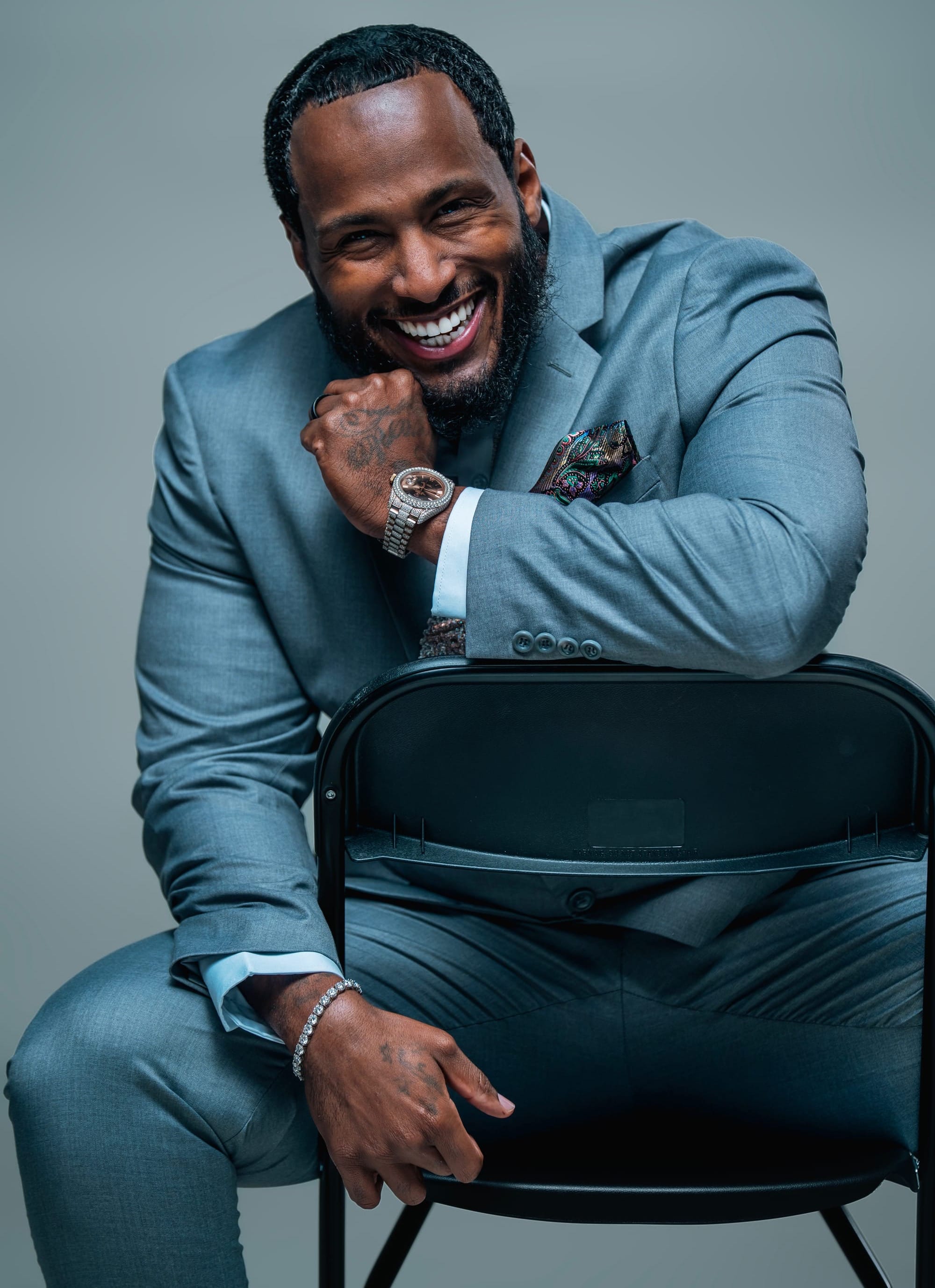
His answer may have been the most revealing moment of our conversation. He told me plainly that he is faithful to his wife, but he would not make some sweeping declaration that he could never make a mistake because he is human. At first, that answer might sound like leaving himself an escape hatch. The longer we talked, however, the more it fit the philosophy that has shaped his entire platform. Truth Hurts has never built his brand by presenting himself as the perfect man explaining everything wrong with everybody else. He talks openly about his own shortcomings, his past and the parts of himself that required work. He doesn’t need to pretend temptation disappears with a wedding ring in order to say he chooses to honor his marriage.
That may ultimately be the smartest thing about his brand. You cannot easily expose someone who never claimed to be flawless. Social media loves building people into moral authorities almost as much as it loves destroying them when they inevitably reveal themselves to be human. Truth Hurts has removed some of that ammunition by introducing his imperfections before anyone else can discover them. If he is wrong, he can be wrong. If he has made mistakes, he can discuss them. If his perspective changes, he doesn’t have to pretend he has always believed exactly what he believes today. There is freedom in refusing to build a business around perfection.
There was another piece of advice from our conversation that deserves more attention than it will probably receive online because it isn’t particularly glamorous: stop taking relationship advice from people who aren’t successfully navigating relationships themselves. Truth Hurts couldn’t understand why people routinely give enormous influence to personalities whose actual lives provide little evidence that their advice works. That doesn’t mean unmarried people have nothing valuable to contribute to conversations about love, nor does marriage automatically make someone wise. But consumers should be willing to examine the person behind the advice. If someone is teaching you how to build something, it is reasonable to ask what they have built.
That responsibility ultimately belongs to us. We spend a lot of time debating whether relationship influencers are toxic, whether social media is ruining dating and whether the gender war is destroying Black love, but perhaps we don’t spend enough time questioning why we continue feeding our attention to voices that make us angry, hopeless and suspicious of one another. The algorithm knows what keeps us watching, but we still decide what deserves our trust. We can choose people with real-world experience. We can choose people willing to admit when they don’t know something. We can choose voices that challenge us without convincing us that love is hopeless.
Truth Hurts will not be for everybody, and I suspect he would be perfectly comfortable with that. His delivery can be rough. His confidence can drift into braggadocio. Some of his opinions will make women roll their eyes and others will make men uncomfortable because despite being a male relationship personality, he doesn’t appear particularly interested in protecting men from accountability either. But there is something refreshing about knowing the person speaking isn’t desperately trying to make you like him.
Maybe that is why the name works so well. The truth doesn’t always arrive wrapped in language designed to make us comfortable, and sometimes the person delivering it isn’t packaged the way we expect wisdom to look. Truth Hurts came from the streets, carried a hustler’s mentality into social media, discovered that people wanted to hear him and figured out how to turn his voice into a business. Along the way, he built an audience that includes plenty of women who find him attractive, married a woman he openly says he is faithful to and continued telling people things they occasionally don’t want to hear. In an online relationship economy where outrage sells, pandering pays and perfection is usually temporary, his greatest advantage may be the one thing he understood before he ever went viral: you don’t have to believe everything Truth Hurts says, but at least you know he believes it.