The Black Card Cannot Save Judge Eleanor Ross

– 4 min read







For generations, Black Americans have fought to gain access to rooms we were never intended to enter. We have celebrated every barrier broken, every glass ceiling shattered, and every milestone achieved because we understand the price that was paid to get there. When a Black woman ascends to the federal bench, it is not merely a personal accomplishment. It becomes a symbol of possibility. It represents progress, perseverance, and proof that excellence can overcome obstacles specifically designed to prevent it. That is precisely why Judge Eleanor Ross’s alleged conduct is so disappointing.
The issue is not that she is a Black woman. The issue is not that she occupies a position that few Black women have historically been allowed to attain. The issue is that character matters, particularly when the position itself requires the public’s trust. When someone sits on the federal bench, their judgment is not simply part of the job description. It is the foundation of the job. Every ruling, every decision, and every interpretation of the law rests upon the belief that the individual wearing the robe possesses the integrity necessary to administer justice fairly.
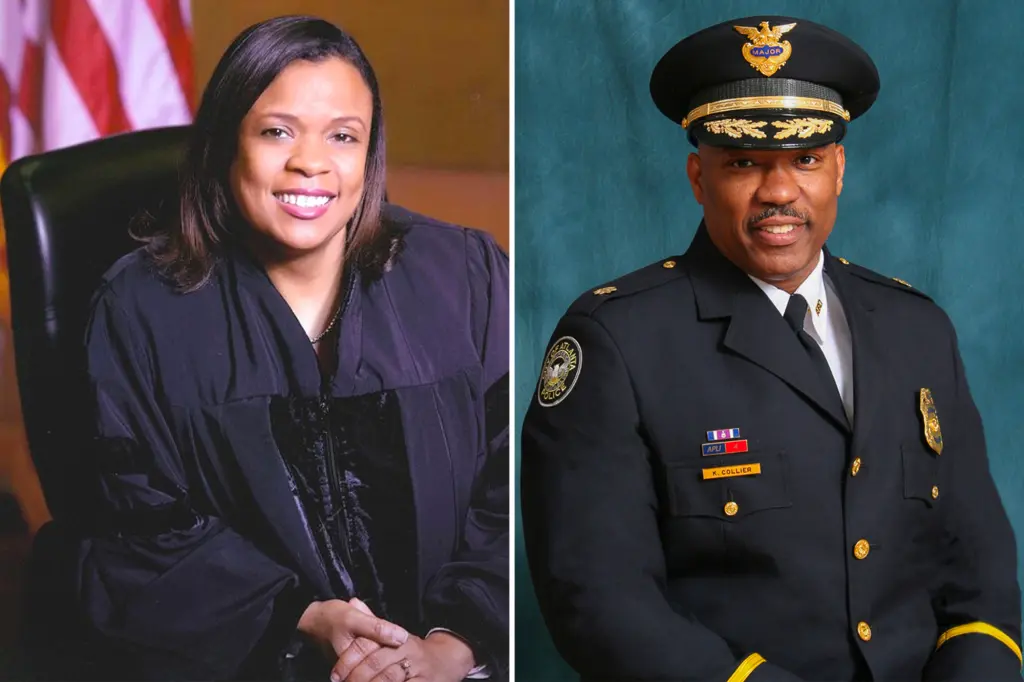
According to allegations detailed in judicial findings, Ross engaged in an extramarital relationship with former Police Chief Kelly Collier. Affairs are hardly new to American public life. Politicians, executives, clergy members, entertainers, and public officials have all seen their careers disrupted by inappropriate relationships. The affair itself is not what makes this situation especially troubling. What elevates the concern is where the alleged conduct occurred and how it was handled once it came to light.
The allegations suggest that interactions took place within the judge’s chambers and in a manner that employees could overhear. If true, that demonstrates more than poor judgment. It demonstrates a profound disregard for professional boundaries and the dignity of the office itself. Federal chambers are not private playgrounds. They are extensions of one of the most respected institutions in the country. Conduct that undermines that environment damages public confidence in the court system and sends a message that rules are optional for those powerful enough to ignore them.
What is even more troubling is that the controversy reportedly did not end with denial. Allegations emerged that Ross attempted to discredit employees who reported concerns. At that point, the issue moves beyond an affair and into something far more serious. An individual who is entrusted with determining credibility, weighing evidence, and administering justice cannot simultaneously engage in efforts to undermine witnesses or shift blame onto others for personal preservation. The very principles required to serve as a judge become compromised when self-protection takes priority over truth.
Additional reports regarding professional conduct only deepen concerns. One allegation involved Ross declining an opportunity to mentor interns because she had reportedly consumed too much alcohol the night before. Standing alone, some might dismiss such an incident as a lapse in judgment. Viewed alongside the broader allegations, however, it contributes to a troubling pattern. The concern is no longer a single mistake. The concern becomes whether the office itself is being treated with the seriousness and respect it deserves. This is where race must be separated from accountability.
The Black community should absolutely celebrate Black achievement. We should champion qualified leaders, executives, judges, educators, entrepreneurs, and public servants who open doors for those coming behind them. Representation matters. Visibility matters. Opportunity matters. But none of those things eliminate the responsibility to uphold standards once those opportunities have been obtained.
Too often, criticism of a Black public figure is automatically interpreted as betrayal. Accountability becomes confused with disloyalty. Legitimate concerns become dismissed as attacks. The result is a dangerous culture where race is sometimes used as a shield against consequences that would be demanded of anyone else. That approach ultimately harms the very community it seeks to protect.
If we demand accountability from judges who are White, we must demand it from judges who are Black. If we criticize corruption among politicians, executives, and police officers from other communities, we must be willing to criticize it within our own. Otherwise, we lose the moral authority to complain when standards are selectively enforced against us. Consistency is what gives accountability its legitimacy.
The same principle applies to Kelly Collier. As a high-ranking law enforcement official, he occupied a position that depends upon public trust. Communities across America already struggle with confidence in both law enforcement and the judicial system. Incidents like this only deepen that skepticism. While countless judges and police officers serve honorably every day, scandals involving senior leadership create lasting damage because they reinforce the public’s worst assumptions about institutions that rely on credibility to function.
The Black community should not be expected to defend conduct that embarrasses the institutions our leaders represent. Nor should we feel obligated to protect individuals whose actions undermine the very progress they symbolize. There is a difference between supporting someone because they share our identity and supporting someone because they have earned our respect. One is automatic. The other is deserved.
I was raised with a simple principle: right is right and wrong is wrong. If my brother made a mistake, my responsibility was not to pretend he was innocent. My responsibility was to tell him the truth. Accountability was never considered betrayal. It was considered love. It was considered character. It was considered necessary.
Judge Eleanor Ross’s race cannot excuse what appears to be a serious failure of judgment. Nor should it. The Black card is not a get out of jail free card. It is not immunity from criticism. It is not protection from consequences. If anything, those who occupy positions of extraordinary influence carry an even greater responsibility because they represent more than themselves.
Representation opens the door. Character determines whether we deserve to stay in the room.