Sojourn of the Black Artist

– 12 min read


Where, anyway, would I go to escape? Where would a Fleeing Black Man Go?” – James Baldwin, Meeting the Man, 1970
The white supremacists’ banal screech reverberates throughout the country—Make America Great Again. The far right has seized control of the Republican Party, and the Republican Party holds a monopoly over both Chambers of Congress and the Supreme Court. Their constituents, what perhaps should be the American proletariat, vote against their interest in a vain pursuit of invisible profits, theoretical billions procured by imaginary foreigners. Under the mandates of our democratically elected demagogue, the state constructs a monolithic prison in the middle of Ochopee, Florida; it sparkles with the grim, but all too familiar, iconography of a concentration camp.
Meanwhile, the nation’s youth fight alone in the streets and avenues of college campuses. They are waging a desperate campaign against the policeman and the provost and the president, to speak freely, to advocate for the 50,000 children in Gaza—dead or dying—that our news networks refuse to acknowledge.
It is your job to record it. Every artist must endeavor to record the world around him, to reflect it back upon his audience. But a Black artist, in America, must be more than just a mirror. He must do more than just record; he must judge, evaluate, and scrutinize. He must do this because no other people, except perhaps his indigenous countrymen, can gaze through the American ideal and identify the American reality. His history is evidence of an uncomfortable truth—that the Land of the Free is but the verdant yield of a very Strange crop.
Thus, it is a difficult condition to endure—writing while Black. I often wake up in the morning to discover my spirit sagging under the weight of recent tragedies, my pen encumbered by history. Writing even a single word is a labor against futility. Ironically, it was a meme, sent by a friend through Instagram, that freed me from this paralytic malaise. It read: “Are you actually depressed or just living in America?” At first, I laughed, or at least chuckled. Then came serious consideration. Could I reclaim a sense of artistic direction through travel? Is it me? Or is it the country?
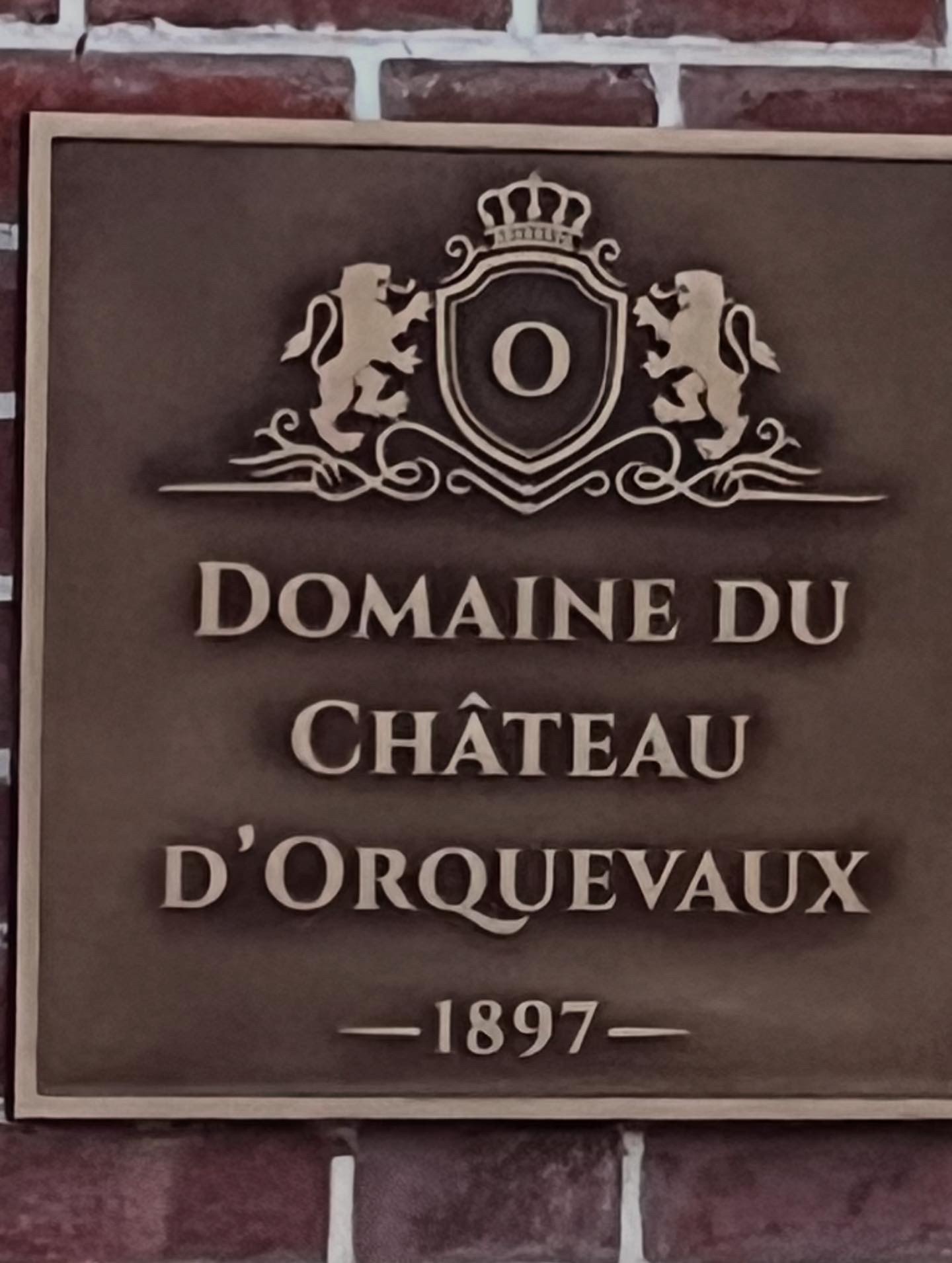
I spent the next few hours searching on my iPhone for fellowships, graduate programs, and study abroad opportunities until I found The Chateau d'Orquevaux Artists and Writers Residency, a program that caters to visual artists, dancers, and writers of all genres. I submitted a few sparse essays from a memoir in progress to their application website with low expectations. By the time I received their decision email in April, I’d nearly forgotten about the whole thing. To my shock, I’d been accepted and with a few thousand euros in grants to fund it. A rare smile parted my broad lips as I whispered to myself:
Who was in Paris?
After a twenty-six-hour jaunt across the Atlantic, I landed in Charles de Gaulle with my laptop bag and a purple backpack filled with clothes, books, journals, and other writing materials. (My ex-military grandparents ensured that their descendants knew the virtues of efficient packing). I exited my gate and stretched my stiff joints and shuffled aimlessly through the airport, searching for any identifiable signs to point me towards the trains. Like a true American, I hadn’t bothered to learn any French in the months leading up to the trip.
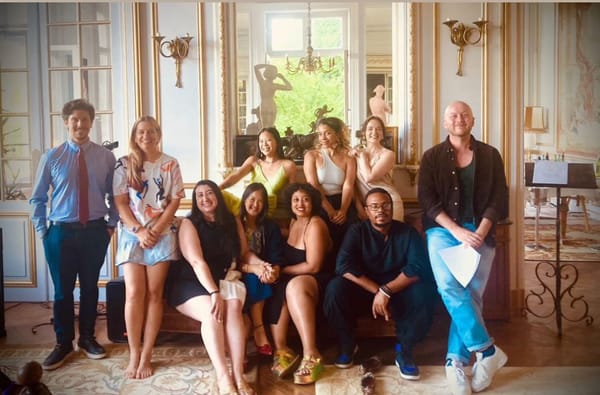
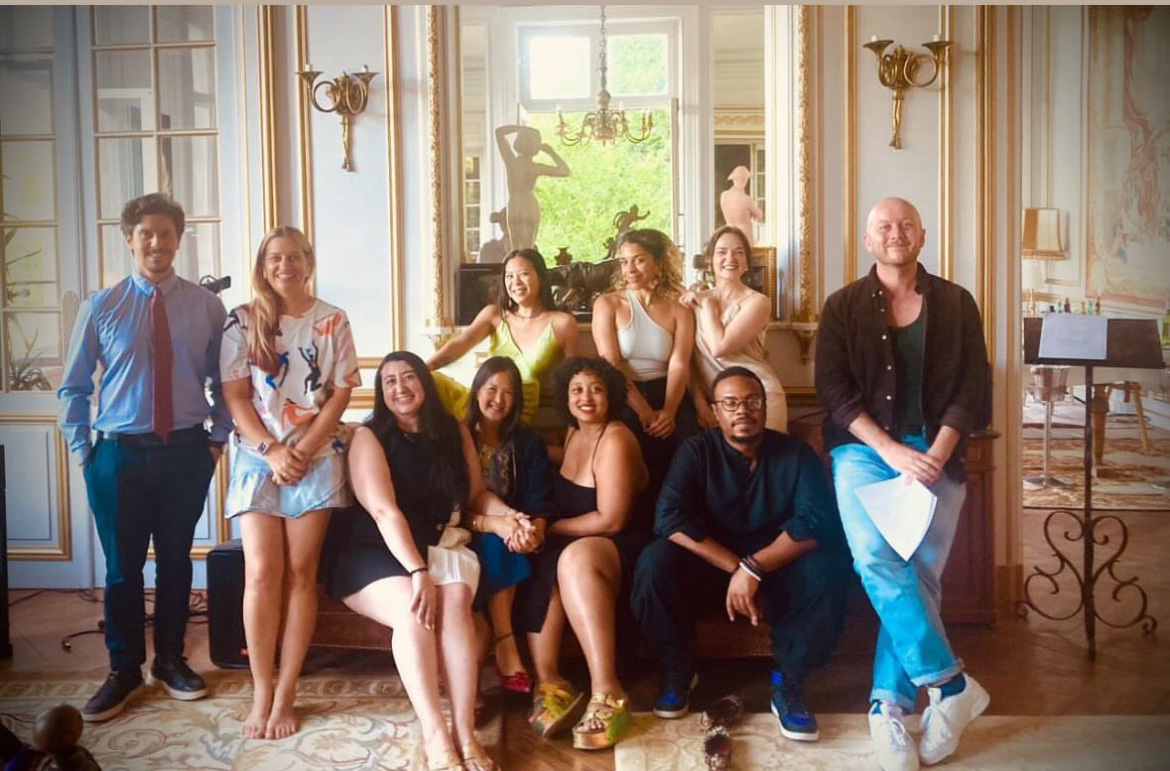
Luckily, a polite boarding agent pointed me towards the train that would bring me to Chaumont. From there, the residency directors, Ziggy Attias and Beulah Van Rensburg, arranged for a van to pick up each of the twenty or so artists in residency and escort us to the Chateau grounds. There were twenty of us in total. I met the first six while waiting for the rail cart.
First, there was Nerida—a dancer who traveled thirty-six hours from Australia and was still patient enough to endure my inane questions and stereotypes in regards to Australian wildlife.
How big is the biggest spider you’ve seen? Do snakes ever burst from your toilet?
Then came Zane, a stoic visual artist from Utah. He opened up to us slowly, like an infant rose bud in bloom. He communicated in short bursts of quips and one-liners. DT was a Vietnamese painter, essayist, and poet. In certain ways, she was the exact opposite of Zane: she was extroverted but spoke in a melodic, metered cadence. Maddy was a singer-songwriter with a particular gift for butchering the French language. Then there was Michelle, a seamstress with a precise eye for geometric relationships. And finally, Gizem, a Turkish painter who utilized natural resources, mud, dirt, and other earthy remnants to create pigments for her landscapes. There was a certain ironic synchronicity to her artwork, using the earth’s remnants to recreate it across the canvas. An act of taking and giving. Sharing.
The friendships between us formed fast and strong, but through no fault of their own, I remained partially reserved from them. I was struggling—still am struggling—to release the racial tension from America, the tension that rests between my shoulders when I am unsure of whether or not racial hatred hides behind a white face. I suppose you could say that I was carrying more than just a laptop case and a purple backpack. I rationalized to myself.
DT is also a woman of color. Zane is gay; he knows what it means to be othered. Nerida is Australian—she doesn’t even come from my racial context. And even if, in the worst-case scenario, she did say the N-word, it would probably sound funny in an Australian accent…
Over time, my apprehensions proved themselves to be the product of magical thinking and cognitive distortions, not reality.. Each of these artists—and the ones that I would meet later—was a considerate, thoughtful person. We rode the train from Paris to Chaumont in a parade of laughter. We discussed art and politics and failed relationships as the shadow of MAGA slipped further behind me, a distant American shadow. I was having fun and slowly making peace that I was probably—as usual—the only Black person attending this event. I was used to being the only. I was one of five Black graduates from my BA class. I was one of three Black people admitted to my MFA cohort.
I am the only Black academic faculty at my current job. I live, ostensibly, in a world of liberal whiteness. The only reprieve comes from brief visits to Atlanta to visit my father, mother, and sister. Other than that, I’ve spent my entire adult life as a living symbol of continued apartheid—of the opportunities people who look like me so often don’t receive.
When we finally reached our destination, one of the Chateau's attendants—Antwon— took our bags and wedged them into the trunk of a white van.
“There’s one more car coming, if you are willing to wait,” Antwon, the attendant, said. None of us seemed to mind a short wait, despite the blistering heat and harsh humidity. Good company, I’ve learned, can ameliorate tribulation conditions. We only waited ten minutes when the next train arrived, and a swarm of passengers emptied themselves from its air-conditioned belly and into the humid air. I wondered which of the dozens of white faces would join our cohort. The answer was none of them.
They came together like the Trinity, three in one, stumbling out of the train station. They shielded their brows as a beam of light showered their dark skin. They looked at me, and I looked at them, and a part of me joined them in mutual understanding and recognition. I nodded. And then they nodded. They introduced themselves to our cosmopolitan group of artists.
“Hi,” the tallest woman said. “My name is Janea.”
“Nice to meet y’all,” the woman in the black dress said. “I’m Minda.”
“Makaylah,” the girl with braids said.
Everyone shook hands and high-fived and made introductions before climbing into the back of the van. Without a need for words, we assembled our Black bodies into the first two rows of seats. I was no longer the only one.
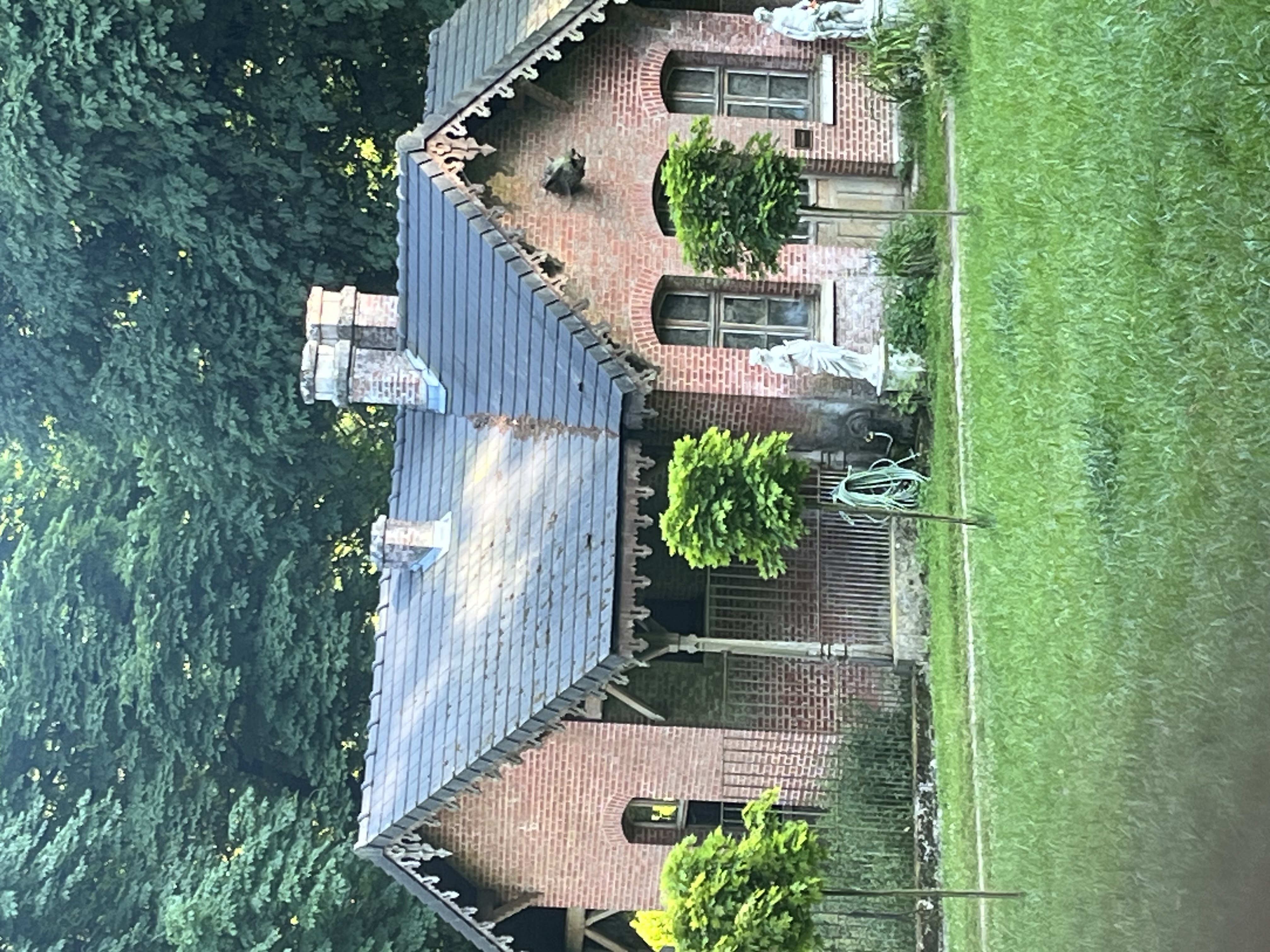
It seems we all end up here. We are not the first.
Uncle Sam didn't have it in his heart to recognize the star Josephine Baker could become without the weight of Mississippi minstrelsy miring down her steps. She skipped out on the Land of the Free in favor of L'Hexagone in 1926. She was one of the first to make the pilgrimage. She introduced Jazz and dance to the Old World. She was far from the last Harlem Renaissance vagrant to settle across the ocean.
After discovering the contradictions of the US Communist Party, which are the same problems, really, that haunt the American “left”, Jamaican-born poet Claude McKay also sojourned to France. Twenty years or so later, seven years after the release of Native Son, Richard Wright pursued his own expatriate adventure. He settled permanently in France in 1947.
Most famously, James Baldwin lived the majority of his life in Paris. One could even argue that he was linguistically impotent whilst living in America. The vast majority of his work, Go Tell it on the Mountain, Just Above My Head, and If Beale Street Could Talk, poured out from Paris to the rest of the world.
Angela Davis. Langston Hughes. Horace Ove. Chester Himes. A diaspora of Black artists and activists spend time in France, sometimes as a quick dalliance, other times as a permanent endeavor. Perhaps there is something about the country that avails itself to all of Africa’s exiled children, those of us who descend from apartheid, Blues, and pidgin English. Perhaps, on some level, all of us Black artists know the danger of artistic verisimilitude in America—they will kill you for honesty.
This is not to say that France is a post-racial society; there are no post-racial societies. We must only look at the conditions of Haiti, burdened for over a century under the weight of “independence debts”. Who knows what Haiti could be today if the French had not drained the wealth from its shores? There is, surely, a case for reparations there, and the record is thick. In many ways, France may be, for the descendants of American chattel slavery, a happenstance, just a spot on the horizon far enough from the American project that those seeking relief from its assault can breathe easier.
Further, each of these writers and artists, every dancer and every activist, kept his gaze on the Stars and Stripes, a gaze that manifested itself through art. It could be said that every African-American artist subscribes to an artistic pointillism—the act of moving away from a subject to see it more clearly. As Baldwin argued in his conversation with the late Nikki Giovanni, “You know, I’d be a fool to think that there was someplace I could go where I wouldn’t carry myself with me or that there was some way I could live if I pretended I didn’t have the responsibilities which I do have…”
It seems we all end up here. We were not the first. We will not be the last. But all of us must, someday, return to reckon with the scorching stars and bloody stripes.
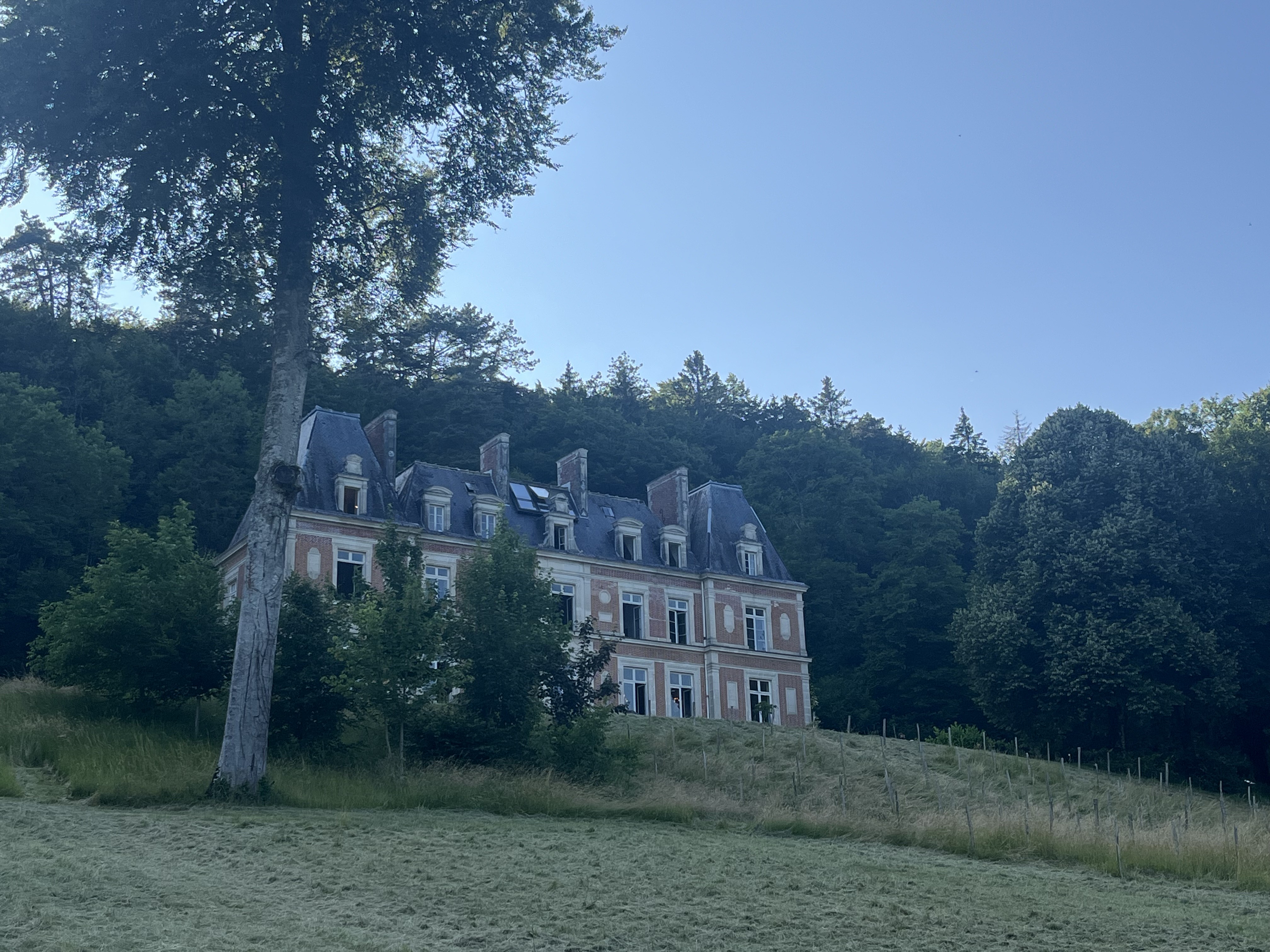
We were living in abject luxury. The bougie accommodations of a French chateau consistently grated against my impostor syndrome. Do I really deserve this? A constant question. Every morning, I woke up to a breakfast of fresh fruit, French bread, and various desserts. After filling my stomach, I would spend perhaps two and a half hours writing alongside my studio-mate, Izzie, a true personification of a New York City girlboss.
After that, I would go swimming in the Chateau's private lake—a pristine body of blue-green water. A pair of swans floated across the surface at the far edge of the pool in peaceful observance of our early morning dips. A private chef prepared the final two meals of the day. Fresh salads, ratatouille, paella, and baked salmon paired with infinite variations of French chocolates, eclairs, and biscuits. These meals were punctuated by evening readings, karaoke, writer’s talks, and dance classes. At 6 PM, Ziggy, Beulah, or Alice, our hosts, opened up the wine cave—yes, a wine cave—where we could purchase red and white wine at our leisure in a soiree environment.
I made more friends. There was Chauntey, a Brown woman dedicated to protest art. Her paintings evoked the amorphous symmetry of Jacob Lawrence with a fierce activist tone. In her art, I saw the Palestinian struggle—which is just another representation of our struggle—for liberation.
Julie made legs, delicate, realistic legs carved and shaped from clay. Her studio was constantly covered in anatomical drawings of body parts. The first time I walked into her studio and witnessed the litany of brown and white legs scattered across her lab table, I cringed—and then I saw the beauty of it all. It is unfamiliar territory to see the body spliced from itself. Entering her studio was like trespassing into a world of disconnected parts, synecdoche given form.
I made many more friends, but I always boomeranged back, unconsciously, almost spiritually, to Janea, Minda, and Makaylah.
When you meet Black women, as a practice, you cannot trust your eyes. Minda appeared to be five years younger than I. Janea could pass for a college student. Makaylah looks like a very tall, stretched-out ten-year-old. I quickly discovered that each of these women were much older than they had any right to be, given what I observed. One of the first inside jokes we developed is that each one could very well be a vampire from Ryan Coogler’s Sinners. We sat together at every meal. During readings, we flocked together and found four adjacent seats. Beverly Tatum once wrote a book entitled Why Are All the Black Kids Sitting Together in the Cafeteria? It seems some laws are universal, even in France.
Like me, Minda is a writer—but with much more experience, publications, and general acclaim. She came to France working on a project in regards to Black women and the ancestral compulsion to migrate. Since the Great Migration, our people have always been a people in motion, and there is perhaps no writer more conscious of that than Minda. I didn’t expect to gain a friend or mentor—someone whose artistic eye is pointed in the same direction as my own, but Black people tend to find strange things in France, things needed but not consciously desired.
Janea is a screenwriter with a sharp wit and a sharper tongue. She’s also beautiful; I never expected that she would also be approachable. I imagine her as a Black woman personification of Bugs Bunny or…Jim Carey. In many ways, we’re writing about the same concepts: blackness, exhaustion, and an ever-withering faith in “the system,” but she manages to do so with humor and irony. Unlike me, she is in control of her own darkness. She reminds me that joy, hope, and fun are also a part of our experience. It is so easy, when you’re young and Black, to forget that you are indeed young; I often feel old. But there was a time when I came to writing as a safe haven—a space for joy and laughter, not just obligation. Janea opens doors of possibilities for me. What have I allowed the world to take from me? And how might I take it back?
And then there’s Makaylah, the youngest of us. She is silent and reserved. That reality masks a buzzing imagination, flying neurons, and bursting synapses. She paints dark skinned angels across canvases stained blue and white, and purple. There is a collection of African-American Folk Tales called The People Who Could Fly. Adapted from the oral legends of our ancestors, the story imagines a world in which the enslaved grew wings from their weary backs and soared away, back to a familiar land.
I don’t know if Makayla has read those old stories. I doubt they inspired her work. Still, when I look at the world she’s depicted on that canvas, I feel connected with a strange, ancestral residue. How long, I wonder, have our people speculated of a North Star, a guide to a better world? And what will it take to reach it? When will we finally grow our wings? She is always drawing, always painting. An observant eye will find her squeezed into a back corner of a crowded room, taking it all in before she releases the world onto a page in a mess of stars and wings and skylines. Perhaps between Janea’s scripts, Minda’s essays, and Makayla’s paintings, we can find those answers.
I spent three weeks with all of these people. The days blended together in a malaise of privilege. If my extended stay had gone on any longer, I may have forgotten that which I carry, the privileges and burdens of my race. Or perhaps they’d have stayed with me, faded into the background of my skin like an old burn or branding. Who knows? But soon enough, the day of departure crept up on me, and it was time to say my goodbyes. I wrote a great work of literature in my time abroad. Much of it may come to nothing; some of it may get published someday. Again, who knows? However, I discovered, on this ancestral pilgrimage, a momentary relief from the country of my origins—the MAGA hats, the patriots, and the supremacists. More importantly, I found new friends and family to share the frustration with.
In adherence to the customs of introverts, I left early in the morning before the goodbyes began; I didn’t feel it necessary. Time is an insistent teacher, and he has taught me that we carry our loads, our friendships, and our nations on our backs wherever we go.
À la prochaine
Until next time. Until the Black artist returns to France.