Juneteenth Honors: Why Atlanta Owes Jen Farris Her Flowers

– 6 min read





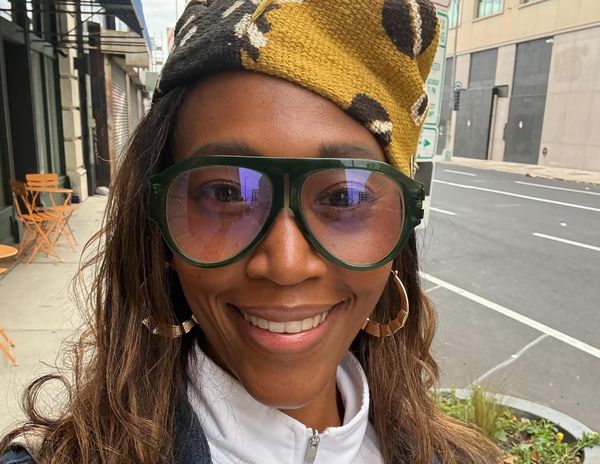
Some people preserve history in museums. Others write books. Jen Farris preserves history by walking us through the neighborhoods we’ve spent years driving past without ever truly seeing.
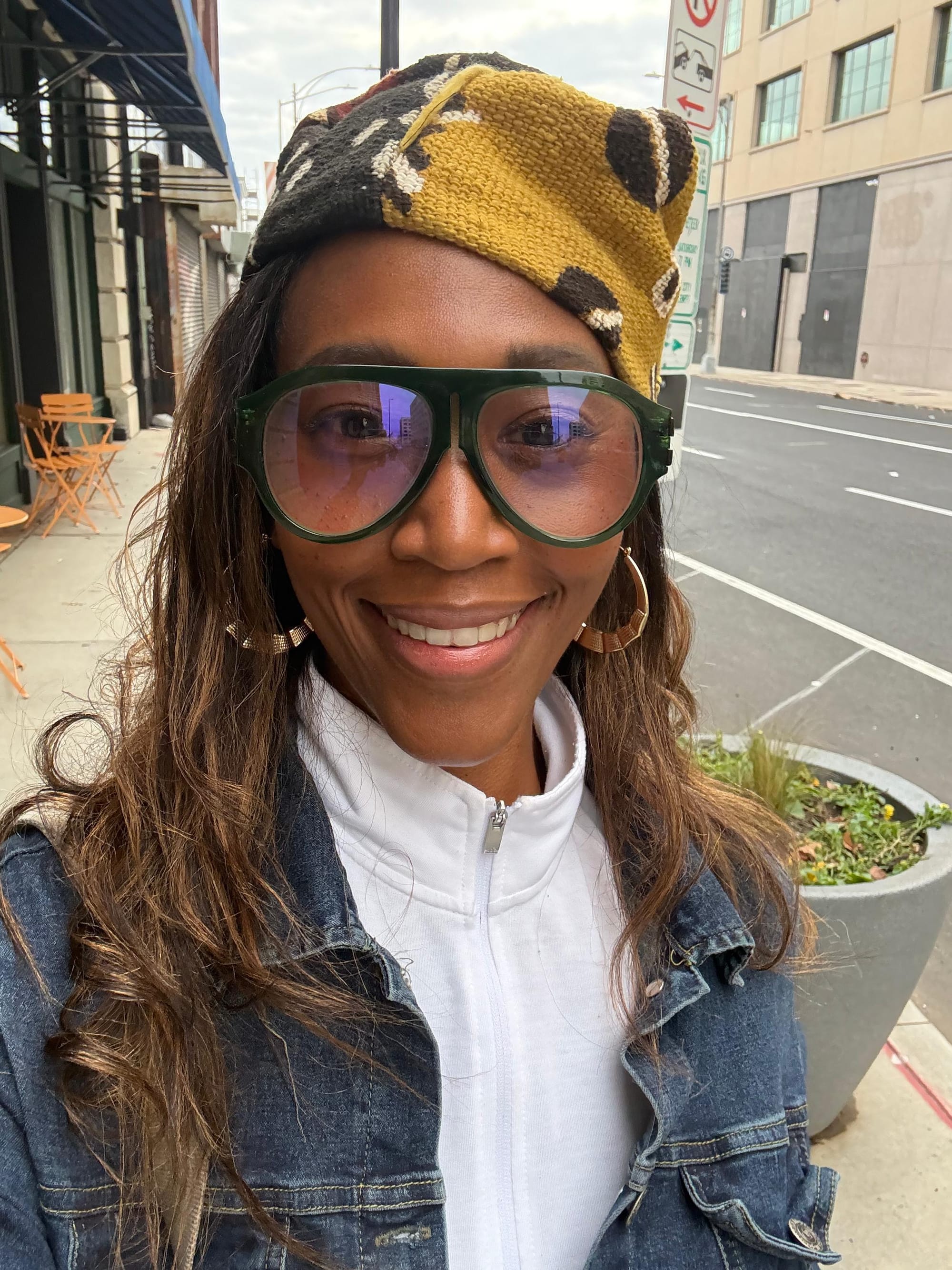
As Lenox & Parker begins its Juneteenth celebration series, it is only fitting that our first honoree is a woman who has made it her mission to ensure Atlanta’s stories are not forgotten. Through her new travelogue web series, Yo! Did You Know?!, Farris is giving residents and visitors alike a front-row seat to the history hidden in plain sight throughout the city she loves.
The series is deceptively simple. In short, digestible episodes, Farris takes viewers through neighborhoods and landmarks across Atlanta, unpacking the stories, struggles, triumphs, and cultural significance behind places many of us pass every day. Yet what appears to be a straightforward exploration of local history is actually something much larger: a preservation project. The first two episodes, which focus on Hotel Row and the West End, are masterclasses in storytelling.
As someone who has lived in Atlanta for nearly 25 years, I can honestly say I learned more in those few minutes than I have in years of navigating the city. I had no idea Atlanta was essentially built around its rail system. I didn’t know the significance of many of the structures that remain standing today. I certainly didn’t know that landmarks I had driven past countless times had such rich and fascinating histories attached to them.
In the West End episode, Farris explores how desegregation and white flight dramatically altered Atlanta’s landscape. As Black families gained access to neighborhoods previously restricted to them, many white residents relocated, leaving behind businesses, theaters, and buildings that would eventually be repurposed by the communities that inherited them. Some theaters became churches. Other structures took on entirely new identities. What emerges in this travelogue series isn’t simply a history lesson. It is a portrait of resilience.
But while Yo! Did You Know?! deserves recognition on its own merits, the story of Jen Farris is every bit as compelling as the stories she tells.
Long before she became one of Atlanta’s most respected location scouts, Farris was a young girl fascinated by architecture.
She recalls taking a drafting class in high school and immediately excelling. Her teacher recognized her natural gift and even created a personalized nameplate as encouragement, convinced she was destined to pursue architecture professionally.
History fascinated her as much as design.
When she attended Bennett College, one factor that influenced her decision was its proximity to North Carolina A&T State University, which offered an architecture program. Even though her career path would eventually lead her into public relations, her love for architecture, design, and history never disappeared.
For years, many Atlantans knew Farris as a publicist working with celebrities, organizations, and major brands. Yet behind the scenes, she remained deeply connected to the city itself.

That connection would eventually lead her into location scouting. As Atlanta transformed into one of the nation’s most important film and television production hubs, Farris found herself perfectly positioned to merge her passions. The work allowed her to explore communities, uncover hidden treasures, and discover stories that had been sitting quietly beneath the surface all along.
It also allowed her to make a tangible impact.
When most people think about movie production, they think about actors, directors, or box office numbers. Few consider what happens to the communities where filming takes place. Farris does. She understands that selecting a location can have a ripple effect throughout an entire neighborhood.
A production that chooses to film in Riverdale, for example, doesn’t simply occupy a building. Crews eat at local restaurants. They purchase fuel. They shop at nearby stores. They utilize local services. Production budgets often help restore structures, repair properties, pave parking lots, and improve facilities.
In some cases, churches receive much-needed repairs. In others, neglected properties receive investments they may not have otherwise seen.
"The magnitude of a location scout can feed an entire community,” Farris explained. It is a perspective that reveals how interconnected economic development and storytelling can be.
But Farris' work doesn’t simply help filmmakers find locations. It helps communities remain resilient. After years of scouting locations across Georgia, Farris began realizing something that surprised her. Many of the people she worked alongside had little understanding of Atlanta’s history. They lived here. Worked here. Built careers here. Yet they knew very little about the stories surrounding them. That realization planted the seed that would later blossom into Yo! Did You Know?!

More than a decade ago, Farris began sharing historical facts and hidden gems on social media. She posted small pieces of information about Atlanta’s neighborhoods, landmarks, and forgotten stories. Those posts generated interest and conversation. Over time, they evolved into something bigger.
Yo! Did You Know?! is the result of more than ten years of curiosity, research, and commitment.
Farris says there was also a sense of urgency as she recognized that the world is changing rapidly. Technology is transforming how information is consumed and preserved. As artificial intelligence becomes increasingly influential in shaping public knowledge, she wanted to ensure these stories existed within the digital ecosystem before they risked being lost, overlooked, or erased. In many ways, the series serves as both an educational platform and an archival project.
The first season consists of eleven episodes covering locations that many Atlantans know by name but rarely understand in depth. Greenbriar Mall, Hotel Row, The West End, Clark University (Brownsville) and more neighborhoods and landmarks that have become familiar scenery during daily commutes. It was called that in the 1870s before moving its location to the AUC and changing its name to Clark College then ultimately, Clark Atlanta University.
Places we pass while rushing to appointments, sitting in traffic, or moving on to our next destination. Farris encourages us to stop and look again.
One of the most fascinating examples involves the Atlanta University Center. Many people know the area as home to Clark Atlanta University, Morehouse College, and Spelman College. Yet fewer understand the historical significance of the land itself.
According to Farris, immediately following slavery, Black Americans were desperate for educational opportunities that had previously been denied to them under threat of violence. The land that would eventually become part of the Atlanta University Center represented protection, possibility, and progress.
The fact that Atlanta would later become home to one of the nation’s most celebrated concentrations of Historically Black Colleges and Universities feels almost prophetic.
It is a reminder that today’s institutions stand on foundations laid generations ago by people determined to create opportunities where none existed.
The same is true of Auburn Avenue. Long before modern conversations about Black wealth and entrepreneurship, Auburn Avenue was producing extraordinary success stories. Farris points to examples of Black business owners building fortunes, women transforming modest investments into significant wealth, and formerly enslaved individuals becoming millionaires within a generation. These stories matter not simply because they are impressive, but because they challenge narratives that often ignore Black excellence, innovation, and achievement.
As Juneteenth reminds us each year, freedom is not merely about emancipation. It is also about preserving memory. That is what makes Farris’ work especially important.
Gentrification continues to reshape communities across Atlanta. New developments emerge. Historic buildings disappear. Longtime residents relocate. Neighborhood identities evolve.
Change is inevitable, but forgetting is not.
By documenting these spaces and sharing their histories, Farris ensures that future generations understand what existed before the next wave of development arrives. She reminds us that buildings are more than bricks and concrete. They are witnesses that hold stories and carry legacies and most importantly they deserve to be remembered.
Atlanta has long marketed itself as “The City Too Busy to Hate,” a city defined by progress, innovation, Black empowerment, education, and culture. Yet even in a city known for moving forward, there is tremendous value in occasionally looking back. That is precisely what Yo! Did You Know?! accomplishes.
The series celebrates Atlanta’s past without becoming trapped in nostalgia. It encourages exploration without requiring expensive travel. It reveals beauty that many residents overlook because it exists just outside the frame of everyday life. Most importantly, it reminds us that history is not confined to textbooks. History is the church on the corner. The old theater downtown.
The abandoned building with a story nobody bothered to ask about. The street you’ve driven down a thousand times.
As Atlanta continues to grow and evolve, voices like Jen Farris become increasingly important. She has combined her love of architecture, history, community development, and storytelling into a project that enriches the city she calls home.
The result is more than a web series, it is a gift.
This Juneteenth, Lenox & Parker proudly gives flowers to Jen Farris—not only for creating one of the most compelling local history series in Atlanta today, but for becoming a living bridge between the city’s past and its future. In a city full of hidden gems, Jen Farris may be one of the most valuable treasures of all.