I Look Into the Mirror, and I See Jim Crow

– 5 min read





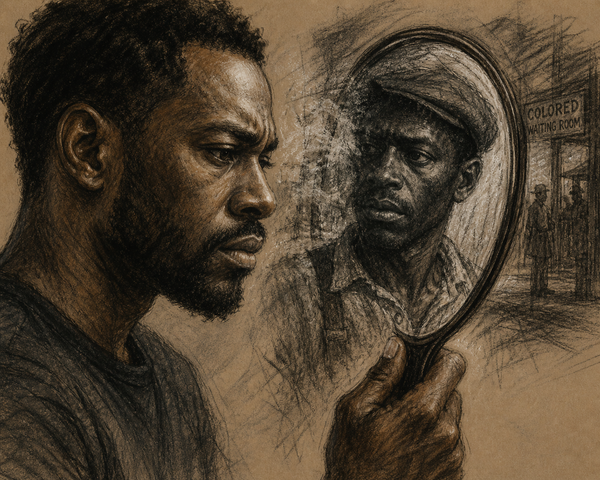
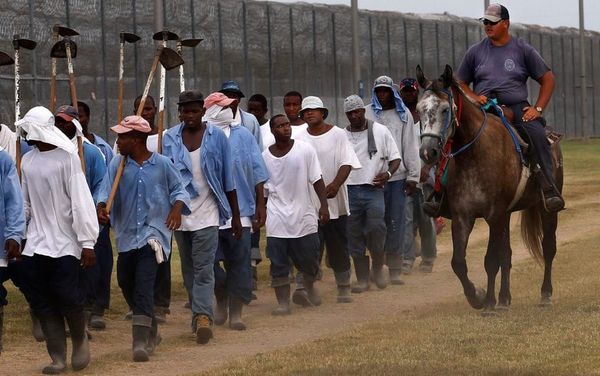
If I had to recommend one novel to an American confounded by the great political storm we are now in, it would be Octavia Butler’s seminal work, Kindred. Butler’s speculative narrative imagines Dana, a Black woman living in 1976, who is thrown back in time, against her will, to the Antebellum South. There she is forced to live amongst her ancestors, the Black slaves and the white slave masters. What startles Dana the most about this time period is not the commonplace banality of sexual violence or the callous disregard for human dignity that defined this era in American history, but the ease with which she finds herself accepting the indignity of her situation.
In one of the most harrowing scenes of the novel, Dana watches a group of Black children playing outside, pretending to sell one another at an auction site; the children were playing slavery. Dana notes, “I never realized how easily people could be trained to accept slavery." Through Dana, the reader is forced to acknowledge that we are not passive agents or observers of our racial history. In Kindred, and perhaps in our current political moment, the past is less a distant time and more of a recurring phenomenon.
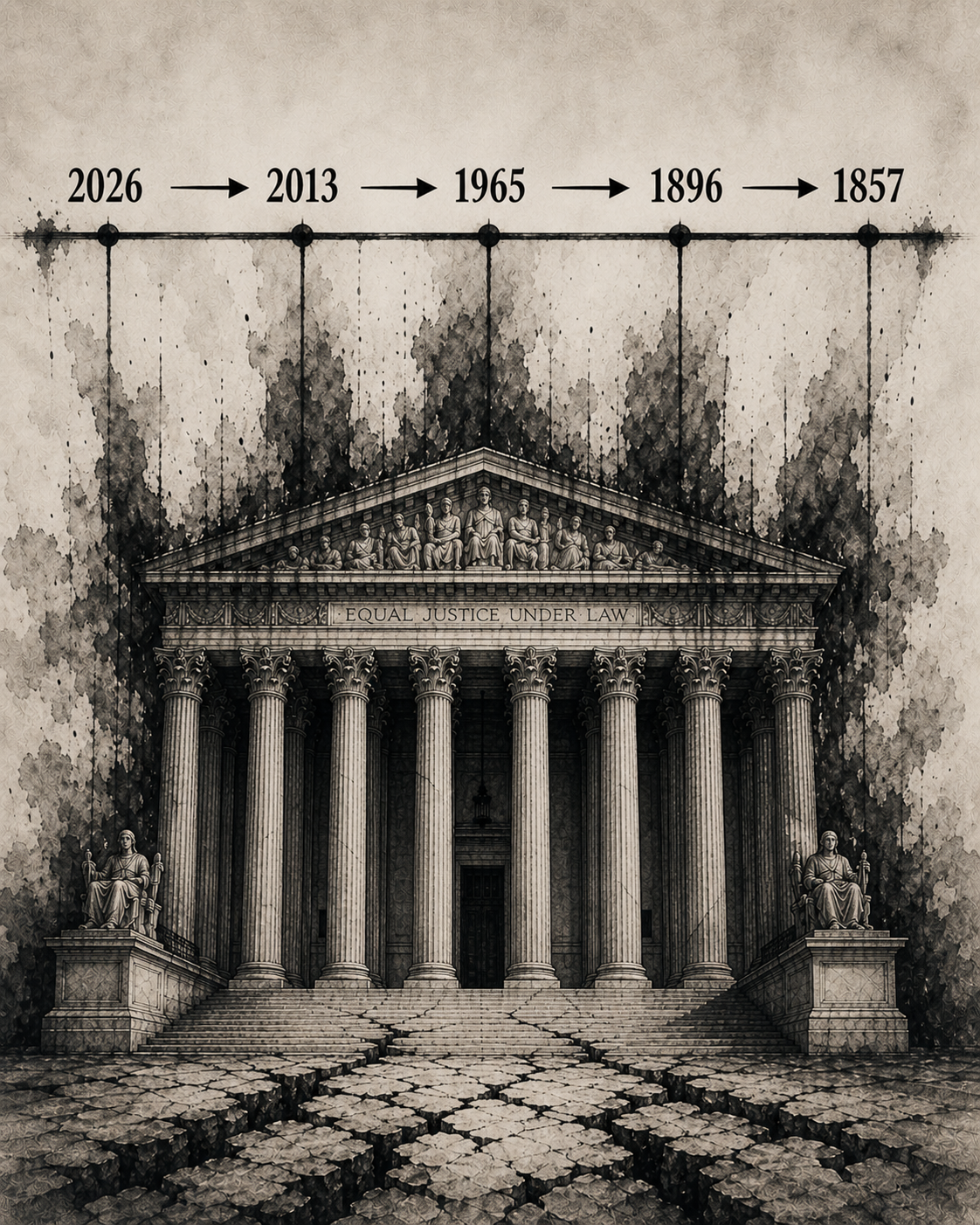
This fact is made all the more evident by Trump's coalition's favorite slogan. Make America Great Again. Clearly, White America has been craving for some time to return to some vague period of supposed prosperity, but the MAGA party consistently refuses to define what point in our history they wish to reinvent. However, despite the conservative urge to filibuster and circumlocute around this place of inquiry, we can deduce their desired cultural trajectory through their legislative action and judicial practice. As the late James Baldwin once argued, “[We] can conclude what they feel from the state of their institutions.”
In a recent interview on the Firing Line with Margaret Hoover, Jim Clyburn, U.S. representative for South Carolina's 6th congressional district, accused the MAGA party of wanting to “get us back as close to slavery as they can possibly get us to.” He argues that recent decisions and rulings of our current Supreme Court undermine the strides made during the Civil Rights Movement. Clyburn’s indictment is one that should not be dismissed without consideration. In September 2025, the Supreme Court ruled that Immigration and Customs Enforcement (ICE) can use race as a determining factor in making stops and arrests. This has already disproportionately affected people of color across the country, with Somali Americans and Latinos in Minnesota reporting an increase in racial profiling in the aftermath of the decision.
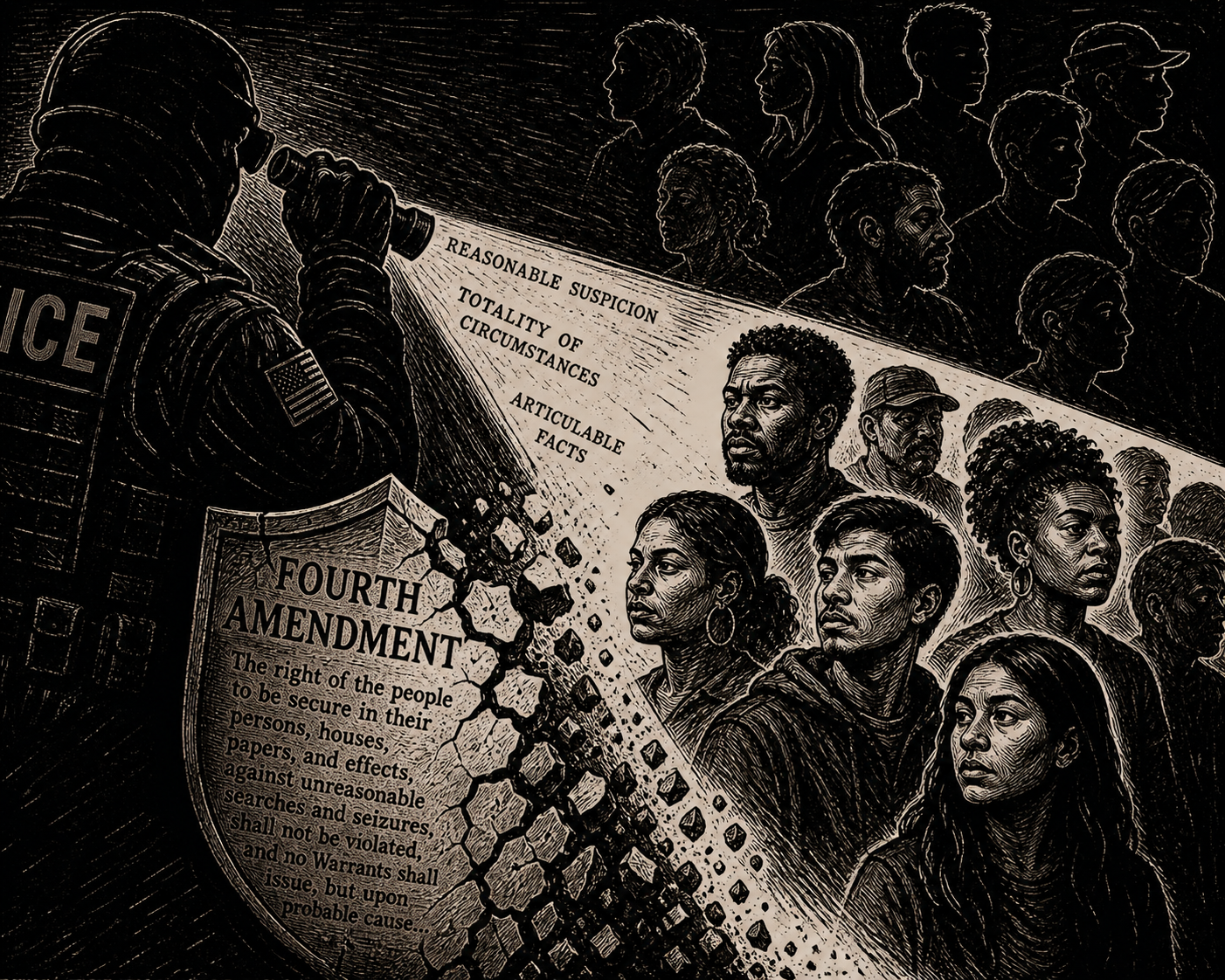
If ICE is allowed to use race to establish probable cause based on pure observation, one can’t help but wonder what this administration believes an American looks like. Does a white Canadian who purposely overstays their VISA have to face the same threats of expulsion as Black and Brown immigrants? Are they treated the same in ICE custody? Further, one must wonder whether this could open the door for other law enforcement agencies to use race more explicitly as a metric to assess criminality. After all, DOJ reports in both Ferguson and Baltimore in 2016 established that many police precincts across the country already conflate darker skin with guilt. It is hard to imagine that this ruling will not, in the long run, inspire more racially charged policies that wane at the foundations of Fourth Amendment protections against unreasonable stops and arrests.
Moreover, conservatives seem to be waging war against civil protections on multiple fronts. Republicans has a whole have fought to revise, alter, or outright repeal entire sections of the Voting Rights Act since 2013. It would not be hyperbole to say that the Voting Rights Act may be the single most important legislative action of the Civil Rights Movement in that it secured the right to vote for people of color across the country. If you are Black and Brown, the Voting Rights Act is the mechanism that dictates whether or not you have the right to participate in elections. In a sense, without the VRA, a Black or Brown person cannot protect any of their other constitutional rights. The Republicans parties strenuous efforts to restrict the VRA have coincided with gerrymandering, packing, and redistricting efforts to dilute the strength of the Black vote nationwide. In the past, Democrats have leveraged the Voting Rights Act to redraw maps that diminish Black voting power to more equitably represent the population.
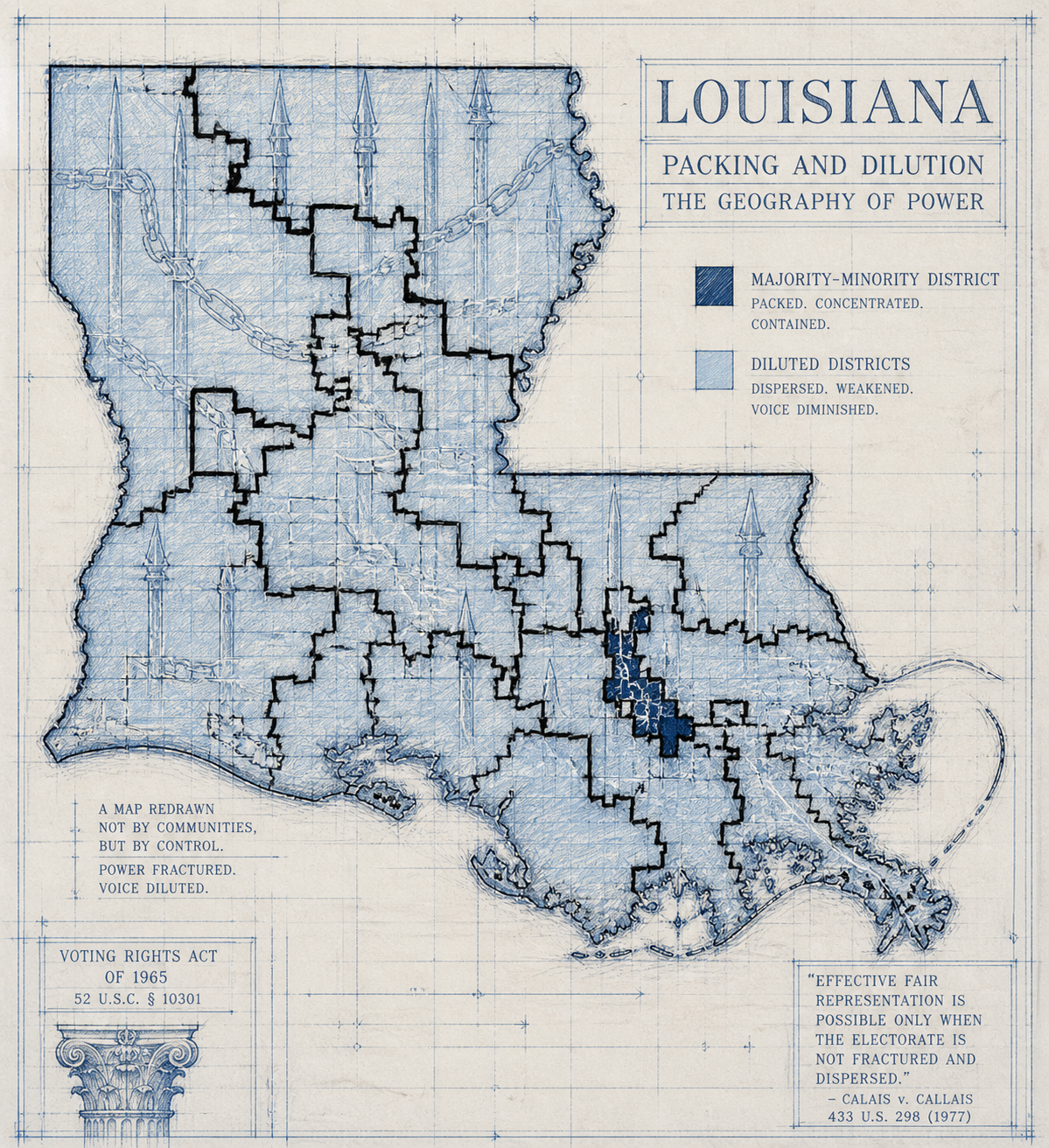
However, the Supreme Court most recently dealt a devastating blow to Section 2 of the VRA, which sought to combat racially discriminatory gerrymandering. These revisions came in the wake of voter dissatisfaction with the Republican Party, a seventy day government shutdown, and most importantly, midterm elections. The decision came as a result of the now infamous Louisiana vs Callais case, where conservative judges determined that redrawing maps that disenfranchise Black voters to better represent them is unconstitutional.
For context, Louisiana, a state where nearly ⅓ of the population is African-American, only has one district where they are represented as a racial majority. Every other district in the state is disproportionately representative of White Americans. Six out of nine members of the Supreme Court Justices determined this redrawing a map that fairly represents the substantial Black population of the state—which amounts to nothing but a thinly veiled measure to stockpile power for the MAGA coalition. The Supreme Court also contended that the only time a map can be redrawn on the basis of race is if there is substantial proof that the original map was written with racist intent.
Every Black American knows how futile it can be to prove intention in the face of disparate impact. In a country built on the backs of slaves and indigenous people, one might think that the government has an obligation to prove to its constituents that it is not racist—instead, we are asking the oppressed to provide evidence of both his oppression and the intent of his oppressor. If you were to commit a crime unknowingly, any moral court of order would expect you, even in your ignorance, to acknowledge the harm doned and to rectify the situation to the best of your ability. But the United States is expecting us to accept harm if we cannot prove it is intentional, to accept the terms of a bastardized social contract in which the only ones who profit are those born with the physiognomy of a proper American.
This is our present moment; but this is also our history. I cannot help but once again think of Dana, thrown back in time against her will, to accept indignities and injustices that she believed to be a part of an archaic past. We must be vigilant and take hold of our history, lest we wake up in a country in which our hard won rights are swiftly pulled out from under us and we find ourselves slowly, everyday, accepting our own slavery.