Generational Wealth Is What We Keep: Ian Dunlap’s Case for Building Beyond the Moment

– 3 min read







As 2026 comes to a close, conversations about money feel less like a trend and more like a necessity. Across the country, families are watching the middle class shrink, household costs climb and financial security grow harder to reach. For many people, the question is no longer simply how to get ahead. It is how to build something that can outlast them.
When investor and financial educator Ian Dunlap joined The Reprint, he offered a sharp reminder: generational wealth is not just money accumulated. It is wealth preserved long enough to be passed down. A family can earn, inherit or acquire valuable assets, but if they are sold or spent as soon as one generation is gone, the wealth may never truly become generational.
Dunlap pointed to a familiar pattern: a parent or grandparent dies, and the family quickly considers selling the house, land or other assets. The sale may feel like the easiest path in a painful moment, especially when heirs have competing needs. But the decision also raises a deeper question: Are we building wealth to enjoy it only in our own lifetime, or are we learning how to protect it for the people who come after us?
Generational wealth is not a number that proves a family has “made it.” It is a practice of building, managing and transferring resources with intention. Keeping an asset in the family may require communication, planning and financial education long before an inheritance is at stake. The goal is not to shame families who must sell. It is to help more families have choices.

Dunlap’s optimism stood out because he did not pretend the moment is easy. His advice was to build multiple streams of income, learn to invest and understand how to use the financial system. Investing, he emphasized, should be treated as a long-term strategy, not a shortcut to fast money. The appeal of day trading and quick returns can distract people from the slower work of building a durable financial foundation.
He also challenged the way our community talks about visible wealth. Black people can face criticism for wearing designer clothes, buying shoes or driving cars that signal success. Dunlap acknowledged that distrust of financial institutions has a history. When people have seen wealth taken or denied, displaying what they own can carry meaning: I earned this. It belongs to me. That history deserves understanding, not ridicule. Still, he urged us to think beyond what wealth looks like and consider how it can grow and remain in the family.
For anyone beginning, Dunlap’s advice was practical: study the market, research what you are considering and ask questions before trusting someone with your money. If you work with a money manager, he suggested asking for 10 to 12 references; a professional with satisfied clients should be prepared to provide them. He mentioned Robinhood as a platform some beginners use and E*TRADE as an example of a more established investing platform. He also pointed to a simple place to start researching: companies whose products people already know and use. His example was Apple. The point was not that everyone should buy a particular stock, but that investing can feel less intimidating when people begin by learning about businesses they understand and most importantly patronize.
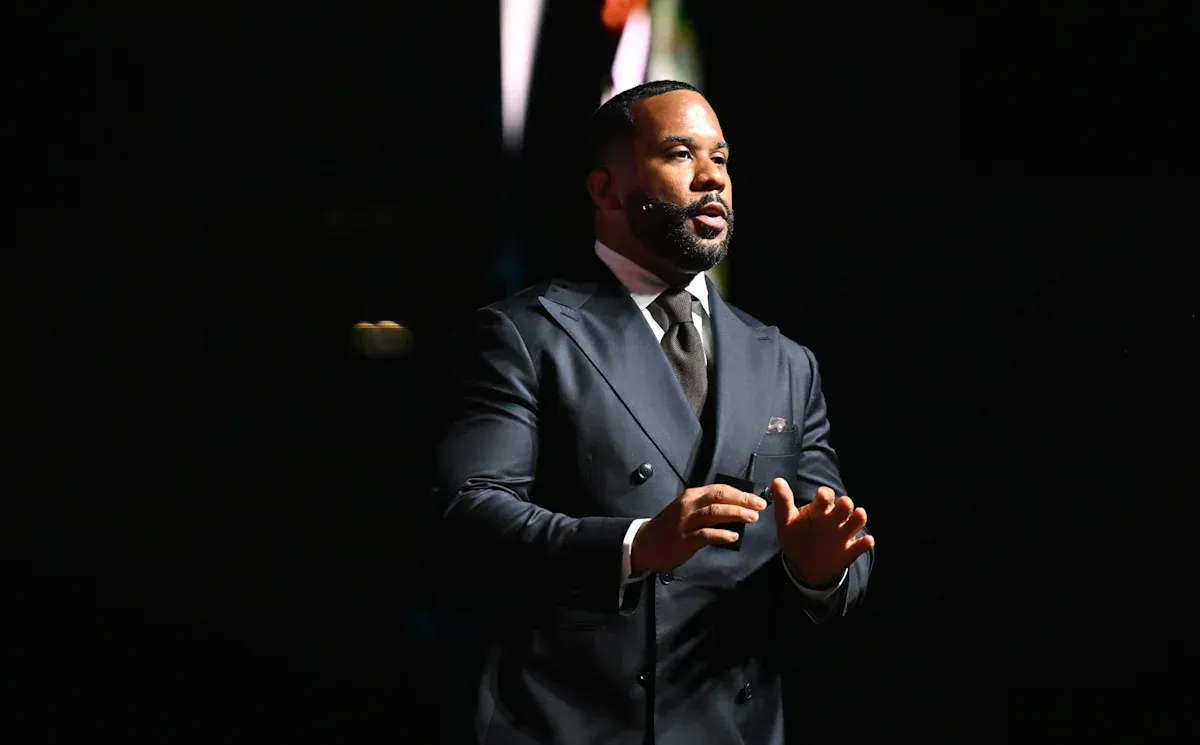
Dunlap’s educational work includes Red Panda Stock Club, alongside Market Mondays and the wider financial education community around Invest Fest. These give people different ways to encounter investing conversations and learn more about the markets.
He shared a personal story about missing an investment opportunity worth millions because, at the time, he was more focused on dating than on the financial information a friend was trying to share. The lesson he drew was especially direct for men: take time to build yourself and your financial footing before trying to build a family. His broader message applies to everyone. Priorities show up in how we spend, save and prepare for the future.
As we move toward 2027, Dunlap’s message offers a useful alternative to financial discouragement: start where you are, learn before you leap and think beyond the next purchase. This holiday season, alongside the latest gadget or gift, consider learning how investing works and whether a small, carefully researched investment fits your circumstances. Wealth is not only what we earn or display. It is also what we protect, grow and pass on.