From Queen to Cautionary Tale: Nicki Minaj, JD Vance, and the Dangerous Politics of Crossover Fame
– 5 min read


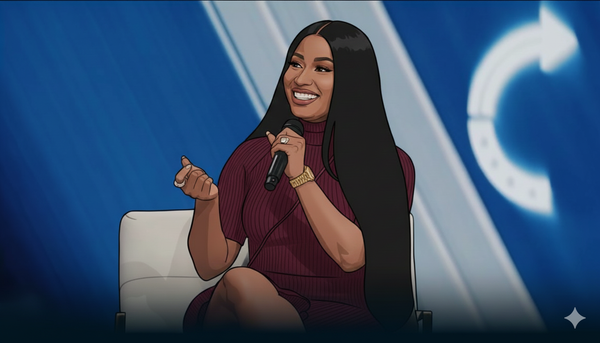
Black celebrity has always come with conditions, but crossover fame comes with consequences few are willing to name out loud. For Black artists, success is often celebrated only as long as it remains palatable, profitable, and politically useful to audiences outside their own communities. When that balance shifts, the fall is rarely about talent and almost always about allegiance. Nicki Minaj’s recent alignment with figures like JD Vance did not happen in a vacuum, nor did it emerge overnight. It is the culmination of a long and visible unraveling that reveals how narrow the margin for Black humanity becomes once crossover validation replaces community grounding. What we are witnessing is not just a personal misstep, but a cautionary tale about how quickly cultural power can be repurposed into political leverage against the very audience that built it.
For years, Nicki Minaj represented the rare exception within hip hop rather than a reflection of its possibilities. She was positioned as the singular female voice in a male dominated genre, celebrated not just for her talent but for her willingness to occupy a space no one else was allowed to enter. That isolation was framed as empowerment, but it also came with an unspoken burden. Being the only one meant being the standard, the gatekeeper, and the shield all at once. As long as Nicki remained unmatched, her dominance was unquestioned and her relationship with her audience felt reciprocal. The moment that exclusivity disappeared, the fragility of crossover fame began to reveal itself.
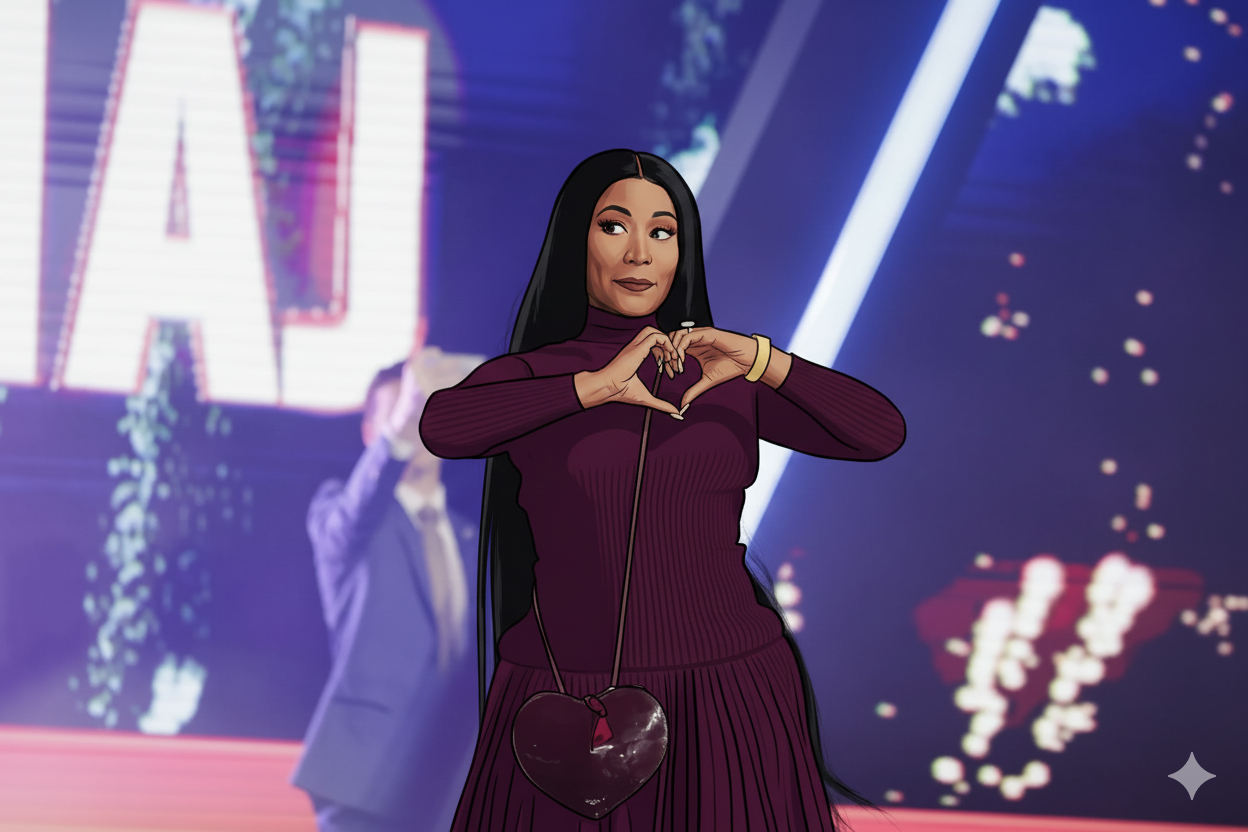
When hip hop’s doors finally opened wider, the shift was swift and destabilizing. The industry that once insisted there was room for only one female star suddenly made space for many, and the arrival of artists like Cardi B, Remy Ma, Latto, and Megan Thee Stallion challenged a hierarchy that had long gone unquestioned. For someone conditioned to survive as the exception, that kind of expansion does not feel like progress. It feels like erasure. Being the only Black woman at the table teaches you to protect your seat at all costs, even when the table itself was never meant to be singular. Instead of recognizing the moment as collective advancement, Nicki interpreted it as personal displacement, and that misreading set the stage for everything that followed.
What began as competitive tension evolved into something more troubling. Nicki’s response to no longer being the only woman at the top spiraled into public outbursts, online feuds, and an increasingly defensive posture toward fans and peers alike. Her fixation on Cardi B, a younger artist who openly cited Nicki as inspiration, shocked longtime supporters. Rather than embracing the role of blueprint, Nicki made an enemy out of the very woman who represented her influence. The confidence that once defined her began to read as insecurity, and the distance between Nicki and her audience widened with every outburst.
Behind the scenes, her inner circle was unraveling. The departure of longtime collaborator and partner Safaree Samuels marked a significant shift, followed by a highly publicized relationship with Meek Mill that felt more performative than grounding. When that relationship ended, Nicki’s decision to marry Kenneth Petty, a man whose past raised serious concerns, further alienated her core supporters. Instead of reckoning with the discomfort, Nicki doubled down, lashing out at anyone who questioned her choices and framing criticism as betrayal.
As her online presence grew more antagonistic, her commercial power began to fade. Album sales softened. Public goodwill eroded. The breaking point came when Cardi B released her second album and announced her pregnancy. Nicki’s response crossed a line that many former fans could no longer rationalize, particularly when her attacks extended to children. By that point, the shift was undeniable. The artist who once embodied cultural cool now appeared consumed by resentment toward any woman experiencing the success she believed belonged solely to her.
It is against this backdrop that Nicki’s political alignment must be understood. Her appearances alongside figures connected to far right ideology did not shock longtime observers. They felt like an inevitable conclusion to a journey already rooted in opposition. To the naked eye, her logic appears simple: my enemy’s enemy is my friend. But that logic ignores a deeper truth. The people she has aligned herself with do not see her as an ally. They see her as a tool.
History has taught us this lesson repeatedly. The recruitment of token Black figures to legitimize harmful rhetoric is not new. From slavery forward, proximity to power has been offered in exchange for silence, compliance, or public allegiance. The tragedy is that these offers only hold value once influence within the Black community has already been lost. When Nicki stood at the height of her cultural power, such alignment would have been unthinkable. The only reason it feels possible now is because the bridge back has already burned.
Crossover fame has always been a one way bridge. Black artists who cross over do so only after being fully embraced by their own communities. White America assigns value based on what Black culture has already certified as cool. Nicki once embodied that cool effortlessly. As a female rapper, she was more digestible to white audiences than many of her male counterparts, while still retaining cultural edge. She enjoyed the benefits of that positioning, from daytime television moments on The Ellen DeGeneres Show to collaborations with pop stars like Ariana Grande. She surpassed being Black famous and entered a rarified space few ever reach.
That space is seductive. The opportunities are bigger, the money more lucrative, and the validation feels universal. But the cost is steep. Authenticity becomes negotiable, and allegiance becomes transactional. Nicki mistook access for protection and visibility for loyalty. Once her relevance within Black culture began to wane, the same crossover platforms that elevated her offered no shield.
The tragedy of Nicki Minaj is not simply ego or ambition. It is the psychological toll of being the first, the only, and the token for too long. Black excellence is often rewarded with isolation. In entertainment and corporate America alike, crossing over frequently means crossing away. The bridge is rarely designed for return.
By standing on stages with people who once labeled her a bad influence on young girls, Nicki did more than make a polarizing business move. She confirmed the very fears her core audience had long been wrestling with. The image burned what little remained of her cultural credibility.
It is a familiar story. We have seen it before. They say God help the child who has their own, but no one warns the one who abandons their own.