Dave Chappelle: Comedy’s King Solomon Brings Perspective to a Year of Racial Polarization, Political Chaos, and Black Disillusionment

– 3 min read


After a year that marked the quiet dismantling of DEI initiatives across many Fortune 500 companies and the loss of more than 300,000 jobs held by Black women, the final reckoning arrived through an uncomfortable mirror. Political chaos and inflation formed the backdrop, but culture delivered the hardest truth. A rapper fueled documentary forced the public to confront the unraveling of a former Black icon, not as gossip, but as a sobering reflection of power, access, and consequence within Black entertainment. The film did not simply document a fall from grace. It exposed how deeply intertwined success, silence, and protection have become in our cultural economy, threatening long held narratives about loyalty, legacy, and who we choose to defend when the spotlight turns unforgiving.
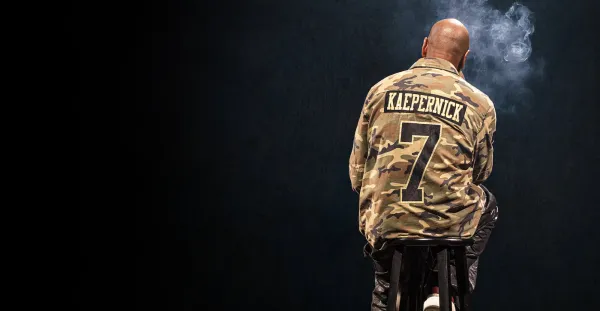
That is where Dave Chappelle enters, not as a savior or a provocateur chasing relevance, but as something far rarer in today’s cultural climate: a necessary voice. In an era where cancel culture and low moral fortitude have reduced too many influential figures to silence or scripted talking points, Chappelle remains unapologetically committed to truth that is not designed to comfort or protect brand equity. His latest Netflix special functions as comedy layered with commentary, diagnosis, and cultural intervention, demanding engagement rather than passive consumption.
Chappelle has never shied away from dangerous conversations. While many of today’s comedians carefully sidestep landmines to protect partnerships and public favor, he leans directly into the discomfort. He dissects the American psyche the way a biochemist studies behavior, breaking down reaction, causation, and hypocrisy at the molecular level. Politics, race, gender, power, and celebrity are all on the table because none of it should be off limits. By the time the laughter fades, audiences are left with an unsettling realization about how censorship around divisive topics fractures society rather than healing it.
What Chappelle understands, and what makes him indispensable, is that humor can accomplish what outrage cannot. It disarms defensiveness, invites curiosity, and creates space for people to sit with ideas they would otherwise reject outright. In a culture addicted to avoidance, Chappelle insists on confrontation delivered with wit, intelligence, and precision. If there is any hope of unity, or at the very least mutual recognition, it lies in our willingness to laugh through discomfort instead of pretending it does not exist.
This is why Chappelle’s audiences remain remarkably expansive, drawing Black and white viewers, young and old generations, religious and secular minds, and people across sexual and gender identities into the same room. His comedy does not ask for ideological alignment but demands honesty from everyone present. He has proven himself a truth teller for all, refusing to bow to capitalist bias or the unspoken fear that governs so many public voices. In doing so, he has become an intellectual conscience not only for Black culture, but for the nation at large.
Nowhere is this more evident than in how Chappelle navigates conversations around power within Black America itself. In addressing the ongoing discourse surrounding Sean Combs, Chappelle occupies a space few are willing to stand in. Like a modern day King Solomon, he admonishes both accusers and defenders with equal candor. He reminds audiences that America has a long and documented history of racially motivated takedowns of powerful Black men, while simultaneously refusing to absolve those men of accountability when harm is real and documented.
By invoking the cautionary tale of heavyweight champion Jack Johnson, Chappelle contextualizes the moment without flattening it. He exposes the hypocrisy of selective outrage while refusing to sanitize abuse or misconduct. That balance is rare and increasingly absent from public discourse. It is also why Chappelle can earn praise from both 50 Cent, one of Combs’ most vocal critics, and his celebrity defenders, including Marlon Wayans, a squeaky clean A-lister whose career has long been insulated from scandal and who has emerged as one of Combs’ loudest public supporters. Respect from opposing camps is not accidental. It is earned through consistency and an unwavering commitment to truth.
Chappelle has always walked the fine line between exposing Black hypocrisy and confronting white supremacy, shining an unfiltered light on both without retreat. His delivery separates him from his peers because it challenges audiences beyond laughter. He pushes them to interrogate their beliefs and recognize themselves in the reflection he offers. In that way, Chappelle functions less like an entertainer and more like a professor of life, holding up a mirror that forces us to examine our behavior through the eyes of others.
There is something deeply intentional about how quietly this special arrived, without spectacle, manufactured controversy, or a press tour begging for attention. Chappelle released the work and allowed it to stand on its own merit. That restraint made the moment feel even more timely. As we approach 2026, still bruised from a year defined by division and disillusionment, what we needed was not additional noise, but wisdom rooted in experience and honesty.
After everything Black America has endured, Dave Chappelle showed up not to soothe, but to ground. In a fractured cultural moment, he offered perspective rooted in truth rather than performance. That is why, in this season of reckoning, Dave Chappelle stands as comedy’s King Solomon, reminding us that clarity remains possible when we are brave enough to listen.