Tony Rock Says the Black Community Should Be Laughing at the Epstein Drama, and I think he is right

– 5 min read



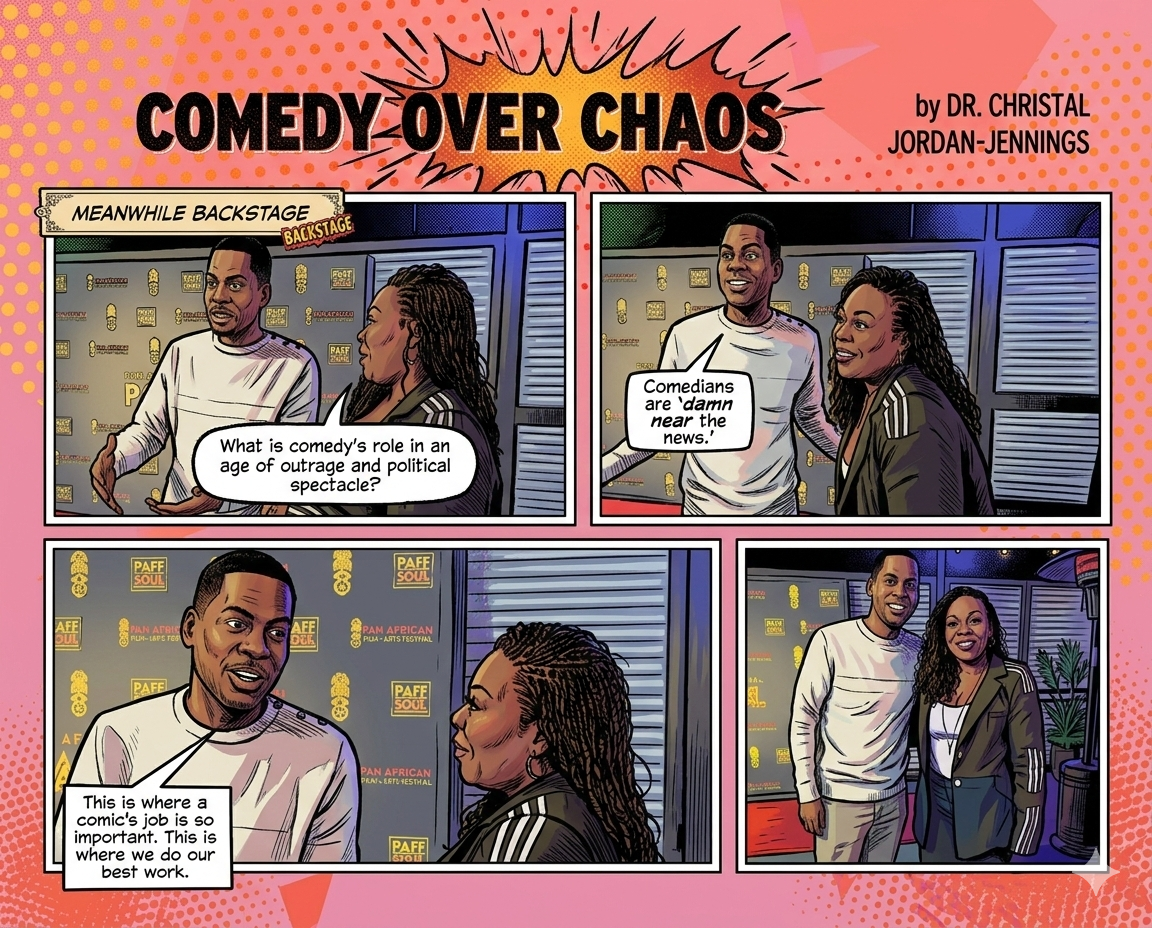
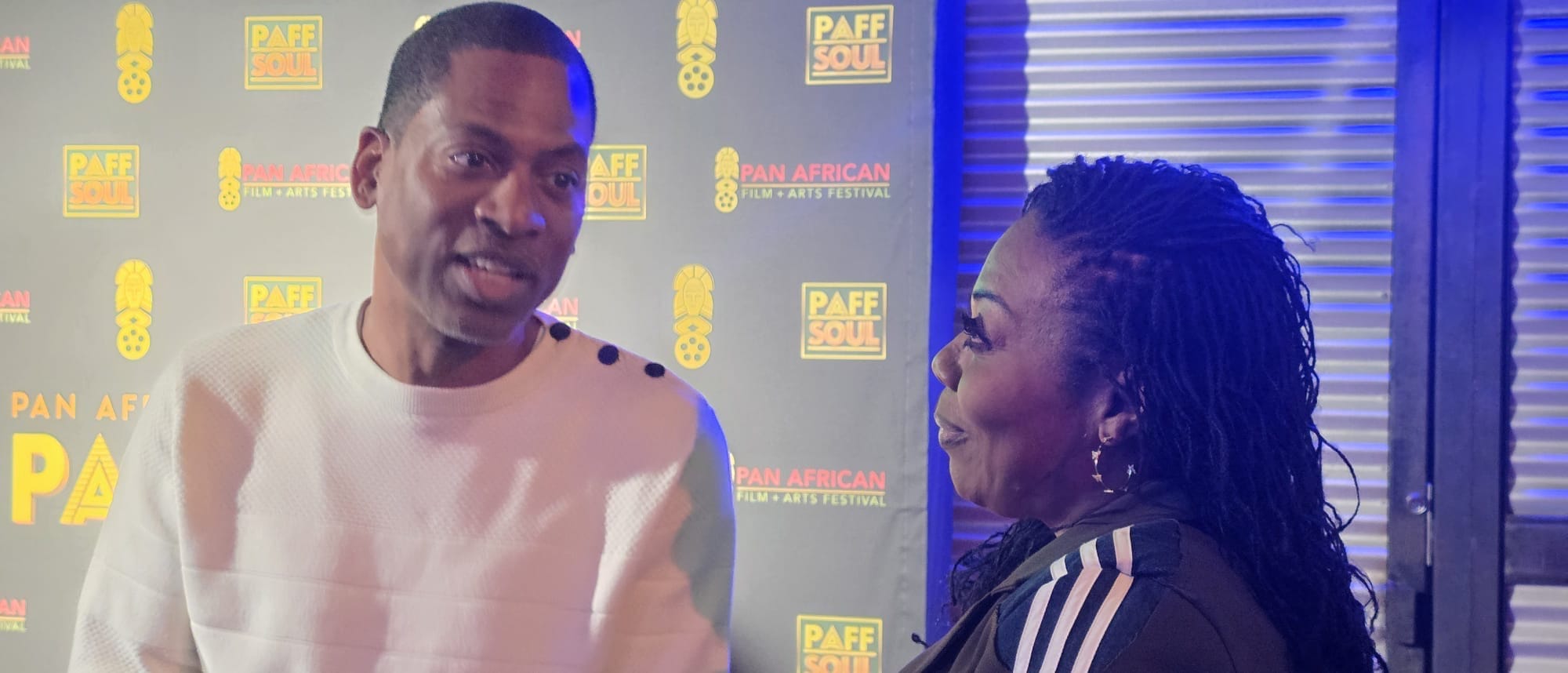
When I sat down with Tony Rock at the Pan African Film Festival, where he was hosting the Soul Comedy Fest and Lenox & Parker was a sponsor, I expected wit. What I encountered instead was clarity. In a year defined by scandal cycles, digital outrage, and nonstop political spectacle, I asked him what role comedy plays in a moment like this. His response was immediate and assured. “Absolutely. This is where a comic’s job is so important. This is where we do our best work.”
That statement lingered, but what followed was even more striking. Rock told me that Black people should be laughing at the Epstein file leaks. Not because the crimes associated with Jeffrey Epstein are humorous, and certainly not because victims deserve dismissal, but because the media frenzy surrounding the files reveals something deeper about how distraction operates in America. The constant reporting, the hourly updates tying new celebrities, political leaders, and government officials to the disgraced network, the breathless social media threads speculating about who knew what and when — all of it has evolved into a spectacle that dominates mainstream news cycles. Yet for the average Black household trying to build stability, create generational wealth, or simply navigate rising costs and economic uncertainty, very little about this spectacle materially changes daily life.
Rock’s perspective was not rooted in apathy; it was rooted in proportion. For generations, Black communities have lived with structural inequities that predate any trending scandal. Wage disparities, housing access, healthcare outcomes, access to capital, education gaps — these realities do not shift because another headline surfaces or another powerful name is rumored to have crossed paths with Epstein. What does shift, however, is our collective attention. And attention, in 2025, is currency. Media ecosystems are engineered to capture it, monetize it, and recycle it. Outrage drives engagement. Speculation drives clicks. Celebrity adjacency drives traffic. The Epstein files have become a content engine, feeding a public appetite for shock while quietly absorbing the emotional bandwidth of communities already carrying disproportionate burdens.
During our conversation, Rock referenced former President Barack Obama, not to implicate him in wrongdoing, but to illustrate contrast. He suggested that if Obama’s name had ever been even remotely associated with something of this magnitude, the response would have been swift, unyielding, and unforgiving. There would have been no extended parsing of nuance, no prolonged speculation, and no benefit of the doubt. That comparison underscores what many Black Americans understand instinctively: accountability in this country has rarely been evenly distributed. The elasticity of consequence — how quickly some are condemned and how carefully others are insulated — is not new. What is new is the speed and volume with which narratives now circulate.

In an era where algorithms reward outrage and repetition, scandal no longer unfolds gradually. It unfolds in real time, amplified by social media platforms that ensure every rumor travels at the speed of emotion. The result is a perpetual state of reaction. Panels debate. Commentators dissect. Influencers speculate. The public absorbs. Meanwhile, the foundational issues affecting Black communities receive a fraction of the sustained attention. How often are discussions about cooperative economics, Black entrepreneurship, land ownership, policy reform, or financial literacy given the same oxygen as scandal? How frequently are those topics pushed to the top of trending feeds?

Rock’s assertion that the Black community should laugh is, in many ways, a strategy for self-preservation. Black comedy has always functioned as more than entertainment; it has served as cultural analysis, social critique, and emotional release. From neighborhood stages to national platforms, comedians have translated chaos into clarity and given language to contradictions that might otherwise feel overwhelming. Rock described comics as “damn near the news,” and while they are not journalists in the traditional sense, they are interpreters of the moment. They expose absurdity. They identify patterns. They challenge hypocrisy without footnotes.
When he says the situation is hilarious, he is not trivializing harm. He is highlighting predictability. Names surface, media erupts, social feeds ignite, and eventually the cycle shifts to the next spectacle. The structural systems remain intact. For communities focused on economic mobility and generational stability, becoming emotionally entangled in every elite scandal can drain energy that might otherwise be invested locally and strategically. Stress is not abstract. Chronic anxiety affects health, productivity, and clarity. For Black Americans already navigating systemic pressures, absorbing an endless stream of scandal can become another invisible weight.

This is not an argument for ignorance. Staying informed matters. Civic engagement matters. Accountability matters. But proportionality matters too. There is a distinction between awareness and absorption, between understanding a national conversation and allowing it to monopolize mental space. If the Epstein file leaks ultimately reveal contradictions among powerful circles that have long operated beyond public scrutiny, then perhaps the revelation itself is less shocking than the collective fixation on it.
There is something quietly radical about refusing distraction. In a media environment designed to keep audiences reactive, choosing focus becomes an act of discipline. Redirecting attention toward what directly impacts household finances, local policy, education systems, and entrepreneurial growth becomes an act of agency. If laughter is the tool that helps relieve the pressure of a spectacle that does not materially shift community outcomes, then perhaps Rock’s provocation deserves consideration.

The headlines will continue. More names will circulate. Social media will keep refreshing. Panels will continue debating. But communities must decide where sustained emotional investment belongs. The bottom line for most Black families is not shaped by trending speculation; it is shaped by ownership, savings, investments, and policy decisions that affect everyday life. When outrage becomes ambient noise, laughter can serve as clarity — not denial, but discernment.
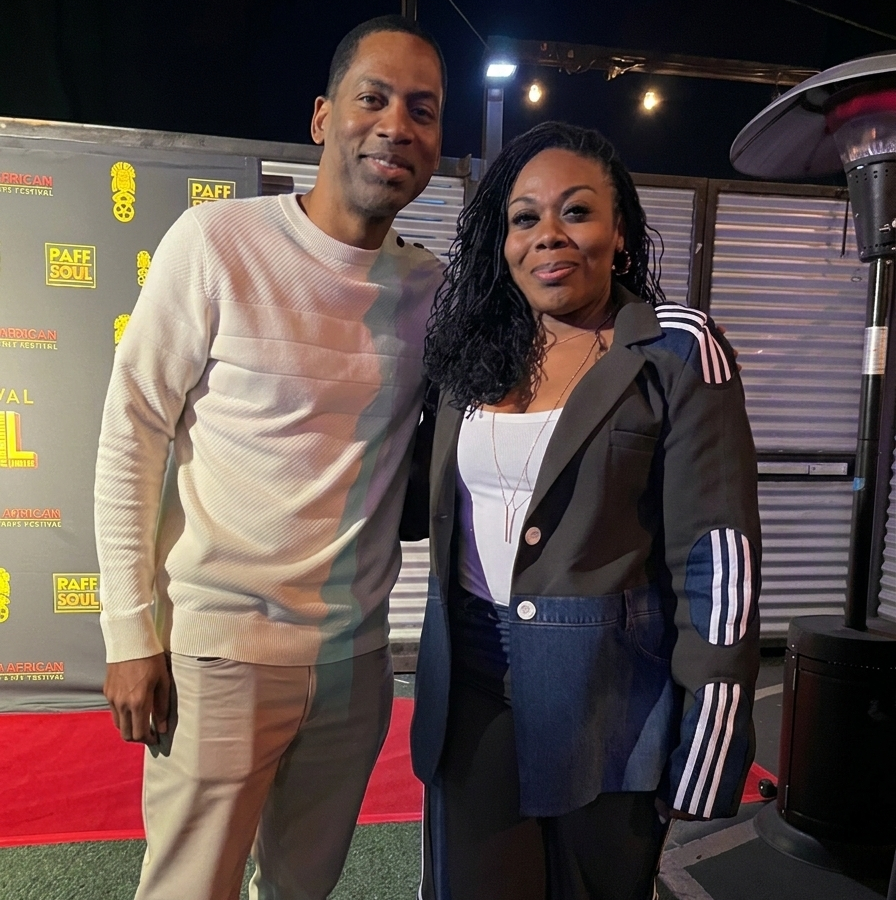
As I left our conversation, what stayed with me was not shock value but strategy. Rock was not dismissing the seriousness of wrongdoing; he was questioning the seriousness of our fixation. In a culture that monetizes distraction, perhaps the most powerful response is to refuse to be consumed by it. And if poking fun at the spectacle allows space for that refusal, then laughter is not escapism, it's focus.