Living in Your Gut: A Conversation with Beatrice Dixon on The Soul Instinct

– 6 min read



There are some women whose presence arrives before their résumé does, and Beatrice Dixon is one of them. When you sit across from her, there is no rush in her cadence, no frantic energy tethered to her success, no performance attached to her power. There is a calmness that feels earned, not curated, and it settles the room in a way that makes you want to exhale a little deeper than you realized you needed to.
Beatrice Dixon, founder of the monumentally successful Honey Pot & Co. brand, did not initially set out to write a book. She told me that plainly, almost with a soft laugh, as though the idea of author felt like something that grew on her rather than something she chased. It began with a simple conversation with a friend who had written a book, and when she asked how one knows it is time to write, the answer she received was disarmingly simple: you know it is time when you have so much to say that it will not sit quietly inside of you anymore. What started as an idea for a self-help book slowly shifted into something more vulnerable and more layered, because she was asked to tell stories. Not just strategies. Not just lessons. Stories. The biography of the woman behind the brand. The mud. The crawl. The spaces between the highlight reel and the headlines. In sharing what she has navigated in building a company centered on women’s intimate wellness, she realized that people needed to understand the journey was never pristine. She did not want anyone looking at The Honey Pot and assuming the path was linear, polished, or untouched by doubt. In many ways, she shared that the book became her own self-help book to herself. It is her offering, but it is also her mirror.
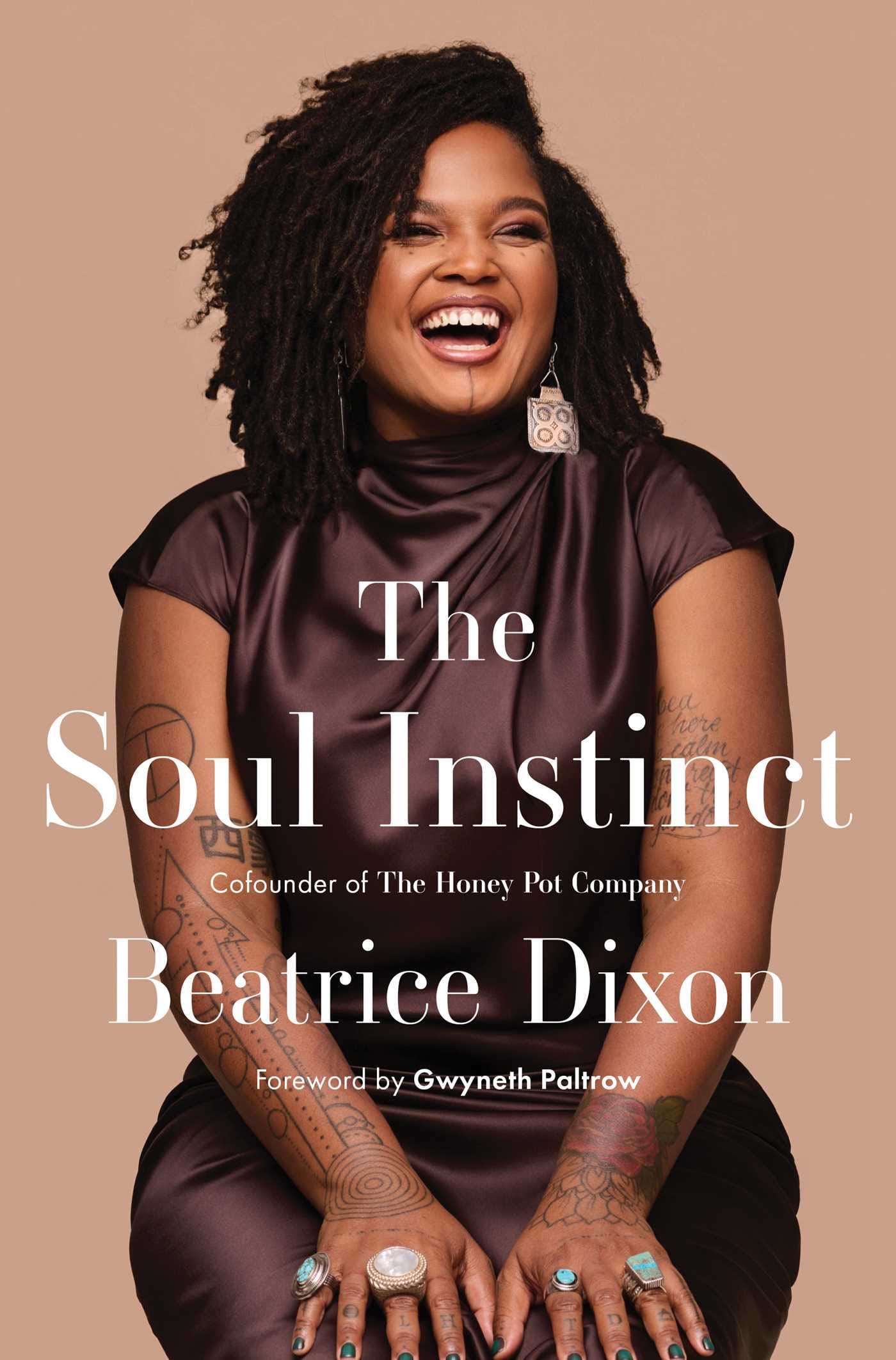
At the heart of The Soul Instinct is something deceptively simple and profoundly radical: wherever you are in your journey is proof that you are still on the road meant for you. The fact that you have made it this far is not accidental. She wants readers to see themselves in her pages, even in her missteps, and to understand that shame has no permanent residence in a life that is still unfolding. Whatever you have done, whatever chapter you wish you could rewrite, whatever version of yourself you are tempted to tuck away, you are not disqualified. You are becoming. She spoke about the importance of getting ourselves out of boxes that we did not even realize we climbed into, of lifting our heads up and releasing the weight of past decisions that no longer define who we are becoming. Her success, she said, was not some mystical alignment of perfect circumstances. It was hustle. It was grind. It was grit. And yet even in that admission, there was no glorification of burnout, no romanticizing of exhaustion as virtue.
Beatrice has always wanted to live a wealthy life, but her definition of wealth is not anchored in accumulation. For her, wealth is peace. It is the ability to be grounded in who you are whether you have much or little, because she has experienced both. When you have been without, she explained, you lose the fear of being without. You learn who you are when the external trappings fall away, and you begin to understand that identity is not attached to inventory. Her mother was present at the book signing, and when asked about that influence, her face softened in a way that told me everything before she even spoke. She said her mother modeled self-care in ways that were both quiet and revolutionary. Her mother was not afraid to go to the doctor. She was not afraid to take time for herself. She did not treat tending to her health as indulgence or inconvenience. She treated it as responsibility.
That part of our conversation lingered with me long after we moved on to other topics, because it struck a place in me that is both tender and honest. As editor-in-chief of this publication and before that as the head of a thriving entertainment PR company, I rarely went to the doctor. Among my circle of high-achieving Black women, it was almost worn like a badge of honor that we did not have time for ourselves. We were building, scaling, producing, delivering, and somewhere in that flurry of productivity we quietly normalized neglect. For me, that neglect resulted in cancer that progressed because I ignored the first signals my body gave me. So when Beatrice talked about something as simple as going to the doctor as an act of self-respect, it did not feel simple at all. It felt profound. It felt like an invitation to reexamine what we celebrate and what we sacrifice in the name of ambition. She admitted that she was initially afraid of doctors herself, but watching her mother show up for her own health reframed it. It was not weakness. It was wisdom.
In her conversation, she spoke about the mountaintop myth, that seductive idea that once you reach a certain level of success, you can finally exhale because the work is done. When The Honey Pot scaled and she made the decision to sell a portion of the company, no longer remaining the major shareholder, the community reacted with surprise and, in some cases, disappointment. We had come to see her as the sole face, the singular owner, the embodiment of the brand. I asked her whether that shift felt uncomfortable, whether she ever wrestled with the perception of letting go. Beatrice's response felt deeply mature and deeply free: you cannot hold on to something that ultimately will not always be yours. Growth requires expansion, and expansion requires release. Work cannot kill you if you are not defined by it. For her, things have to feel good in order for her to do them. The product had to work. It had to serve. It had to genuinely benefit the women it was created for. That alignment mattered more than ownership percentages.
Beatrice has never shied away from talking about the role of her ancestors in her story, and she continues to speak about it with the same certainty now. The original recipe for her first product, she reminds people, came to her through a dream in which her grandmother spoke to her. That was not a marketing angle. That was her lived experience. She believes we all have access to guidance beyond what we can measure or quantify, and that wisdom is not limited to bloodlines alone. Sometimes it is a loved one who has transitioned. Sometimes it is a mentor whose voice still echoes in your decisions. Sometimes it is a symbol, a dream, a quiet nudge that you would miss if you were too busy forcing outcomes. She believes allowing flow is essential. Not trying to dominate it into submission. Flow requires trust, and trust requires self-awareness. Black women in particular, she believes, are deeply tapped into this instinctual knowing if we allow ourselves to recognize it as a gift rather than dismiss it as emotion. It begins with paying attention to what moves you, what unsettles you, what excites you, what frightens you, and then having the courage to honor that information rather than override it. For Beatrice, living in her gut has been the through line. She trusts her instincts. She trusts her guides. She trusts that the wisdom she carries did not arrive by accident.
As we move through the first quarter of 2026, I find myself wishing that more career-driven, ambitious women would pick up The Soul Instinct not because it offers a formula, but because it offers permission. So often we chase validation externally, collecting titles, accolades, revenue milestones, and applause as evidence that we are enough. This book gently reminds us that everything required to become the best version of ourselves already exists within us. Trusting your gut does not only apply to business decisions. It applies to love. It applies to friendships. It applies to the relationship you have with yourself, which is the first and most enduring relationship you will ever hold. If that relationship begins from wholeness, from self-awareness, from self-acceptance, then everything else you build stands on steadier ground. We become better leaders, better partners, better caretakers, better creators, not because we achieved more, but because we aligned more deeply with who we already are. Spending time with Beatrice Dixon did not feel like interviewing a founder who built a multimillion-dollar brand. It felt like sitting with a woman who has learned how to listen to her soul and has chosen, repeatedly, to honor what it says. In a culture that rewards noise and speed, that may be the most radical act of all.