“If You Come for Me, I’ll Send Jesus After You”: The Cult of the Real Housewives and the Case of Mary Cosby

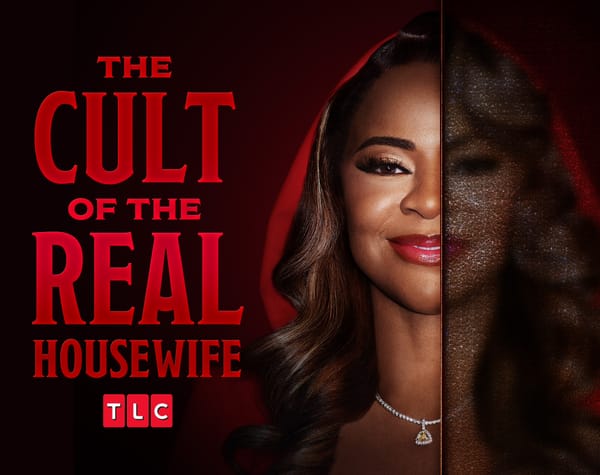
By the time the clock strikes midnight on New Year’s Day, Real Housewives fans won’t just be raising a glass—they’ll be confronting a very different kind of reality. TLC’s three-hour documentary event, The Cult of the Real Housewives, premieres with a focus on one of the franchise’s most polarizing figures: Mary Cosby of The Real Housewives of Salt Lake City.
“If you come for me, I’ll send Jesus after you.”
When Mary first delivered the now-infamous tagline, it landed as shocking, quotable, and oddly humorous—another moment destined for Bravo lore. At the time, it felt like theatrical bravado. But this documentary reframes that line entirely, asking viewers to consider whether it was less a punchline and more a reflection of unchecked spiritual authority.
From the moment Mary Cosby appeared on RHOSLC, she was an anomaly. A fashion-forward pastor who inherited her grandmother’s Pentecostal church and married her step-grandfather, she represented something the franchise had never seen before. She was also the only Black woman in a cast set in Salt Lake City, a region with very little Black representation. That combination—religion, race, and reality television—made Mary a figure of fascination long before scrutiny followed.
As the series explores, intrigue soon gave way to discomfort. Bloggers, superfans, and former congregants began asking deeper questions about Mary’s leadership and the inner workings of her church. What initially circulated as whispers eventually coalesced into a single, unsettling word: cult. TLC’s documentary does not make formal accusations, but it does something far more impactful—it centers the voices of people who say they were emotionally, mentally, and financially manipulated under the guise of faith.
The power of The Cult of the Real Housewives lies in that shift of perspective. For years, Mary has been viewed through the glossy lens of Bravo—confessionals, couture, and controversy edited for entertainment. What viewers haven’t seen are the former members of her congregation who describe fear, devotion, and loss in deeply personal terms. Family members also step forward, adding emotional weight and credibility to stories that have long existed on the fringes of fandom.
Behind the camera are two creatives whose careers uniquely position them to tell this story. Emmy-nominated producer Deniese Davis, Founder and CEO of Reform Media Group, brings a culturally grounded and disciplined approach shaped by projects like Insecure, A Black Lady Sketch Show, and Rap Sh!t. Her role here is notably restrained. Davis is clear that the intent is not to prosecute, but to document—allowing people who have never had access to a platform the space to speak for themselves.
That same philosophy drives filmmaker Julian P. Hobbs, whose work on House of Hammer established him as a director unafraid to interrogate power, legacy, and silence. Hobbs approaches Mary Cosby’s story with a similar lens, emphasizing the imbalance between someone with a massive reality TV platform and those whose stories were drowned out by it. His focus remains firmly on the people who say they were harmed—not the celebrity who benefited.
The documentary also acknowledges the role of Housewives media in bringing these stories to light. Prominently featured is Up and Adam, one of the most influential blogs in the Housewives ecosystem. Through interviews with Mary’s sister, brother, and sister-in-law, the series connects online investigation with lived experience, illustrating how fan culture often uncovers truths long before networks are prepared to confront them.
Mary’s own history with the franchise adds another layer of tension. When allegations first surfaced publicly, she skipped the reunion and exited RHOSLC entirely. She later returned as a “friend of” before reclaiming a full-time role. The last image fans have of her is from BravoCon in November—confident, in a chic black leather ensemble that was both flashy and fashion-forward, seemingly unshaken. But The Cult of the Real Housewives fundamentally alters the context in which audiences now view her presence on the show.
Once this information becomes part of the public consciousness, it can’t be unseen. It raises unavoidable questions about how Mary will navigate cast dynamics, fan reactions, and future reunions. More broadly, it challenges viewers to reckon with the cost of treating real people as reality TV characters.
At its core, this documentary is about power—specifically how religion and spirituality can be weaponized when paired with influence and fame. Faith has historically been a force that both uplifts and oppresses, unites and divides. In the wrong hands, it can become deeply dangerous. The Cult of the Real Housewives does not condemn belief itself, but it does expose what can happen when belief goes unquestioned.
As documentaries increasingly shape pop culture conversations, they are also reshaping accountability. Audiences are no longer passive consumers; they are active evaluators, deciding who they support, who they question, and who they quietly disengage from. With this series, TLC sets a sobering tone for the year ahead—one that challenges viewers to look beyond glamour and consider the real human impact behind the spectacle.
And once those voices are heard, Real Housewives will never quite be the same.
Written by
Comments