After Countless Losses in Court, Diddy Finds His First Win on Zeus


The day after Christmas, it was announced that Justin and Christian Combs would be partnering with Zeus to release a documentary centered on their personal experience navigating the public fallout surrounding their father, Sean “Diddy” Combs. Not long after that announcement, it also became public that Justin spent part of Christmas Day visiting his father in jail. That detail immediately became a talking point, with many people reacting emotionally, projecting meaning onto a moment that, to me, felt far more human than controversial.

A child’s love for a parent is one of the strongest bonds God ever created. That kind of love exists outside of headlines, court documents, and public opinion, and it does not dissolve simply because the world has decided how it feels about someone. So no, I don’t question Justin Combs for spending Christmas with his father. There is nothing scandalous about a son choosing to be present with his parent during a difficult time. But with that son and this father, that Christmas Day was spent strategizing and cultivating an opportunity for Diddy to reclaim his voice.
This documentary did not emerge in isolation or without context. In The Reckoning docuseries, viewers saw footage of Diddy instructing his sons during a moment when he himself was choosing silence. He explained that God told him to sit down and be quiet, but he made it clear that this instruction did not extend to Christian, nor by implication to Justin. That distinction matters, because while the sons are the ones now speaking publicly, the direction behind their voices feels deliberate and carefully considered.
Shortly before the Zeus documentary was announced, Christian Combs made headlines for saying that he would slap 50 Cent if he ever saw him. The statement spread quickly online, largely because it was met with disbelief and ridicule. Not because people doubted that Christian was emotional, but because the threat itself felt disconnected from reality. It landed more as posturing than possibility, and the public reaction reflected that.

Christian Combs is a 27-year-old man who grew up extremely privileged. He did not grow up navigating survival in Harlem or experiencing the kind of adversity that forges instinct, restraint, and consequence in the way his father did. He is very much a product of access and protection, which places him squarely in the category of a nepo baby, a term that is often weaponized but not inherently negative. Still, within Black culture, masculinity has long been tied to struggle, resilience, and lived experience, and respect is often extended to those who had to fight their way into position. Christian does not carry that kind of cultural currency, which is why the idea of him physically confronting someone like 50 Cent reads as unrealistic, even if the emotion behind the statement is real.
I believe Christian meant what he said, and I believe it came from a place of loyalty and protectiveness toward his father. The issue is not whether his feelings are genuine, but whether the statement aligns with who he actually is and how the world understands him. Emotion alone does not override perception, especially when masculinity, power, and cultural credibility are all part of the equation.
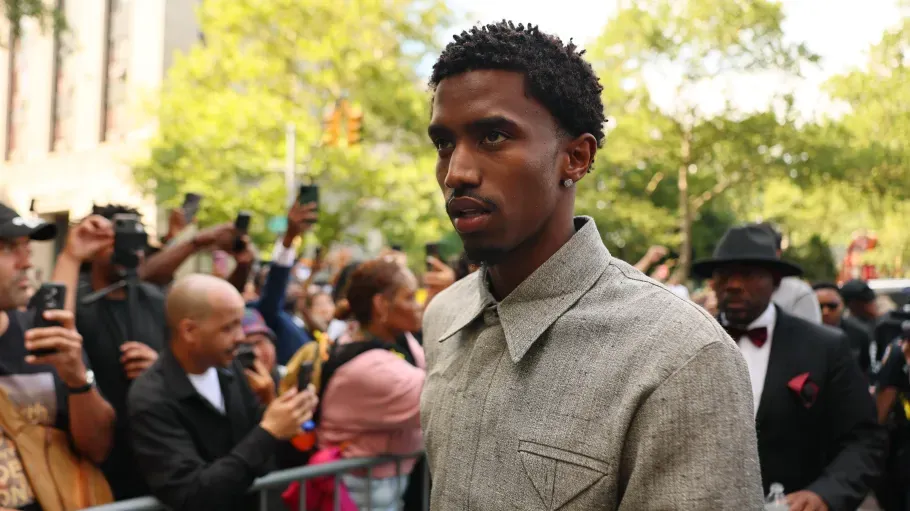
Justin’s position is slightly different, but no less complicated. His response to The Reckoning was influenced not only by his father being the subject, but by the way his mother, Misa Hylton, was mentioned. From his perspective, that portrayal crossed a line, and it makes sense that he would feel compelled to push back. As a result, Justin is navigating loyalty to his father, protection of his mother, and the weight of public scrutiny all at the same time. That emotional convergence helps explain why this documentary exists at all.
What I find particularly interesting is the public response. For months, critics argued that The Reckoninglacked objectivity, even though the person with the most animosity toward Diddy was not actually featured in the documentary itself. And yet, the moment this Zeus project was announced, many of those same critics openly admitted they would be watching, despite fully acknowledging that this documentary would not be objective in any traditional sense.
This project is being told through the sons of the accused while the father they view as a super hero remains incarcerated, after multiple legal attempts to change his circumstances have failed. Bail has been denied, appeals have gone nowhere, and even the attempt to accuse the judge of bias was dismissed. Diddy is paying an extraordinarily expensive legal team to continue being unsuccessful, but one thing about him has never changed. He does not stop pushing, and that tenacity has defined his entire career long before it defined this moment.
Lemuel Plummer has stated that the documentary is not intended to determine guilt or innocence, but simply to give Justin and Christian space to share their voices. That makes for a great talking point in a curated press release, but in reality, anyone paying attention understands what this represents. This documentary functions as Sean Combs’ response to everything that has happened to him, including The Reckoning, delivered through the people closest to him and positioned in a way that bypasses the legal system entirely.
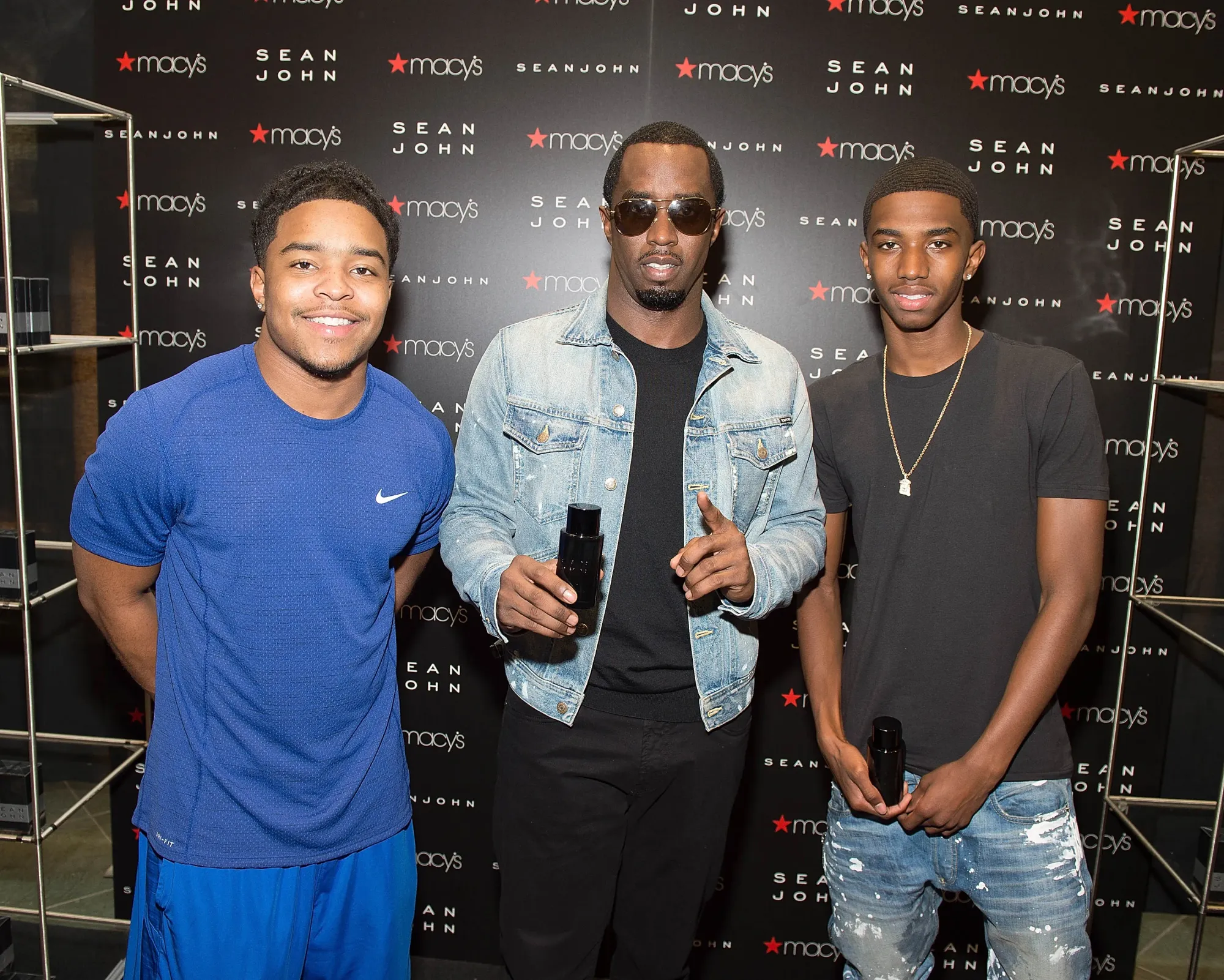
It also aligns with the way Diddy has always centered his sons in his legacy. Justin was his first child, and he named a restaurant after him in Atlanta, a well-regarded cultural staple that tourists loved and locals recognized as part of the city’s social fabric. Christian has often been referred to as his twin, sharing not only physical resemblance but mannerisms, movement, and proximity on stage. Justin modeled for Sean John, Christian performed alongside his father, and both sons have long been woven into his public identity. Their lives, opportunities, and visibility have always existed in close orbit around him.
So it makes complete sense that they would now be positioned as his representatives at a time when he no longer has the ability to speak freely for himself. I do not believe Justin and Christian are wrong for telling their story, nor do I believe the public is wrong for listening. Zeus will almost certainly see massive numbers from this project, and in that regard, the documentary will be successful.
But it is important to be honest about what we are watching. This will not simply be two adult sons independently reflecting on their experience. This will be Sean Combs’ narrative delivered through their voices, shaped by love, loyalty, and lifelong proximity to his power. The emotion may belong to Christian and Justin, but the framing, the intent, and the message will be unmistakably Puff’s.
Written by
Comments